

Key Takeaways
Why Enclosure Setup Matters More Than Most Owners Expect
A bird's enclosure is not simply a container - it is the primary environment shaping its physical health, psychological stability, and long-term quality of life. Unlike mammals that can recover quickly from environmental shortfalls, birds are physiologically sensitive: respiratory systems designed for efficiency make them the first to suffer from poor air quality, and skeletal structures adapted for perching mean inappropriate surfaces cause lasting foot damage.
The decisions made before a bird ever arrives home - cage dimensions, bar spacing, room placement, and household chemical inventory - have consequences that last years. If you are still deciding which species fits your household, our bird species guide covers noise level, social needs, and care demands for common pet birds. If you are already mid-preparation, the new small pet arrival checklist complements this guide with broader first-week logistics.
What you will need
What You'll Need
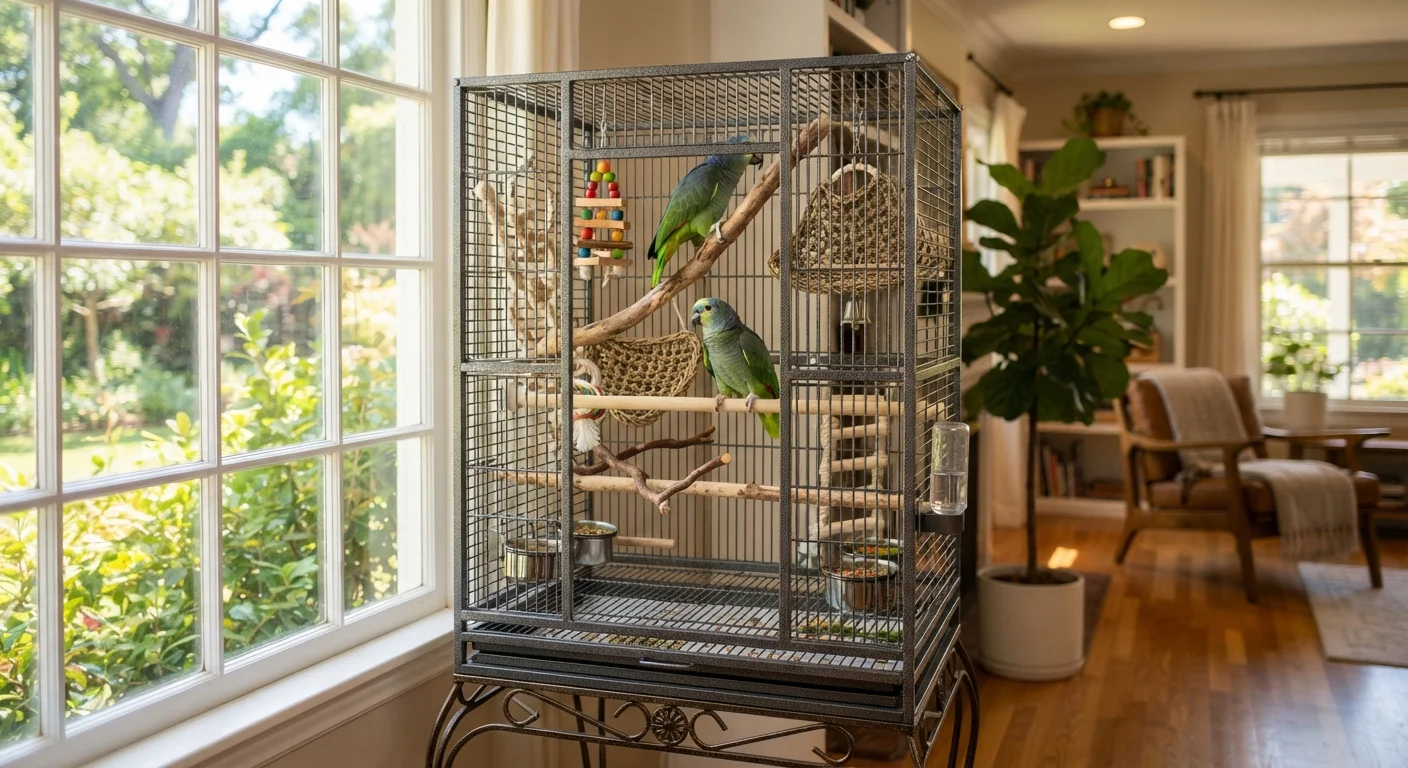
Appropriately sized cage with horizontal bars
Provides the primary enclosure; horizontal bars allow climbing, which is important for physical activity.
Natural wood perches (varying diameters)
Mimics branch variation found in the wild, promoting foot muscle use and preventing pressure sores.
Rope or soft perch
Offers a textural contrast and a comfortable resting surface, especially useful for birds with foot issues.
Stainless steel food and water dishes
Resists bacterial buildup and does not leach compounds; dishwasher-safe for thorough cleaning.
Bird-safe cleaning solution
Used for regular cage surface cleaning without leaving toxic residues.
Digital thermometer/hygrometer
Monitors ambient temperature and humidity near the cage to ensure conditions stay within a safe range.
Full-spectrum avian lighting (if natural light is limited)
Supports circadian rhythm regulation and calcium metabolism in species that require UVB exposure.
Step-by-Step: Building a Safe, Functional Enclosure
Choose the correct cage size and bar spacing
The cage must be large enough for your bird to fully extend both wings simultaneously without touching the sides - this is the minimum functional standard, not the ideal. Wider is always better. For parrots and hookbills, include ample horizontal bar space for climbing. Bar spacing is non-negotiable: too wide risks head entrapment or escape, too narrow limits grip.
- Budgies / parrotlets: bar spacing ≤ 1/2 inch
- Cockatiels: bar spacing ≤ 5/8 inch
- Conures / small parrots: bar spacing 3/4 inch
- Medium to large parrots: consult an avian veterinarian for species-specific guidance
Select a safe placement location
Position the cage in a room where the family spends significant time - birds are social and benefit from ambient human activity - but not the kitchen. Place it against a solid wall on at least one side to give the bird a sense of security. Avoid these locations:
- Near windows with direct afternoon sun, which can cause rapid overheating
- Near exterior doors or drafty hallways
- Above or adjacent to heating and air conditioning vents
- In bedrooms if your species is vocal and disrupts sleep
Ideal ambient temperature for most common pet birds is roughly 65-80°F (18-27°C), though individual species have their own tolerances - verify this for your specific bird.
Install varied perches at different heights
Place perches at multiple heights, but leave clear flight or hop paths between them. The lowest perch should be high enough that tail feathers do not drag in cage substrate. Avoid placing a food or water dish directly beneath a perch - droppings contaminate both quickly.
Use at minimum two or three different perch materials:
- Natural hardwood branches (apple, willow, or manzanita are commonly recommended as safe options - verify any wood species before use)
- Rope or soft cotton perch for resting comfort
- Cement or mineral perch (one only, placed near a food bowl) to passively maintain beak and nail length
Audit and remove indoor airborne hazards
Birds have a highly efficient respiratory system that makes them acutely sensitive to airborne compounds that cause little or no immediate harm to humans. Before the bird is brought home, conduct a room-by-room audit:
- Replace or permanently remove non-stick (PTFE-coated) cookware and appliances
- Discontinue scented candles, air fresheners, incense, and essential oil diffusers in shared spaces
- Stop using aerosol sprays (hairspray, cleaning products) in rooms the bird occupies
- Ensure carbon monoxide detectors are functional - birds are sentinel indicators of poor air quality
- Avoid smoking of any kind indoors
Set up food and water stations hygienically
Attach at least two stainless steel or ceramic dishes - one for food, one for water - mounted at a comfortable height and away from perches above them. A separate shallow dish for bathing is useful for many species; this should be offered a few times per week and removed when not in active use to prevent bacterial growth. Refresh water daily at minimum and wash dishes with hot water and a bird-safe cleaner after each use.
Add species-appropriate enrichment and establish a daily routine
A bare cage causes chronic stress that can manifest as feather destructive behavior, repetitive movements, or aggression. Before your bird arrives, install two or three bird-safe toys - foraging toys, shreddable items, or puzzle feeders depending on species preference. Rotate these periodically rather than replacing everything at once.
Establish and maintain a consistent daily light and dark cycle. Most pet birds do well with 10-12 hours of darkness in a covered cage. Irregular schedules disrupt hormonal and behavioral stability.
PTFE Fumes Are Acutely Lethal to Birds
Polytetrafluoroethylene (PTFE), the coating used in many non-stick pans and appliances, releases invisible fumes when overheated that can kill a bird within minutes. Never use non-stick cookware in the same home without permanent, dedicated ventilation, and keep birds away from kitchens at all times. Consult your avian veterinarian if you are unsure whether your cookware poses a risk.
Verify Bar Spacing Before Purchase
A cage marketed for 'small birds' may still have bar spacing wide enough for a budgie's head to become trapped. Measure actual bar gaps: most budgies and parrotlets need spacing no wider than 1/2 inch, while cockatiels typically require no more than 5/8 inch. A bird that can fit its head through bars but not pull it back risks strangulation.
Environmental Hazards and Ongoing Maintenance
Setting up the cage correctly is not a one-time task. Weekly maintenance - wiping cage bars, replacing substrate, inspecting perches for splintering or bacterial buildup - prevents the gradual accumulation of hazards that are easy to miss day to day. Replace any perch showing deep cracks, heavy soiling, or signs of mold immediately.
Monitor the bird's droppings daily: changes in color, consistency, or volume are often the first visible sign of illness or environmental stress. Any significant deviation warrants a call to an avian veterinarian rather than a wait-and-see approach. Once the physical enclosure is secure, behavioral needs become the next priority - our enrichment guide explains why a well-built cage is still just the starting point.
Rotate Perches and Toys Periodically
Swapping out one or two perches or toys every week or two keeps the environment mentally stimulating without overwhelming the bird with sudden complete change. Gradual novelty supports behavioral health and can reduce feather-destructive behaviors over time. See our enrichment guide for more strategies.
This article provides general educational information for pet bird owners and is not a substitute for guidance from a licensed avian veterinarian familiar with your specific bird's species, health history, and living conditions.