

Pets & Animals

New Small Pet Arrival Checklist: Before, During, and After the First Week

Share
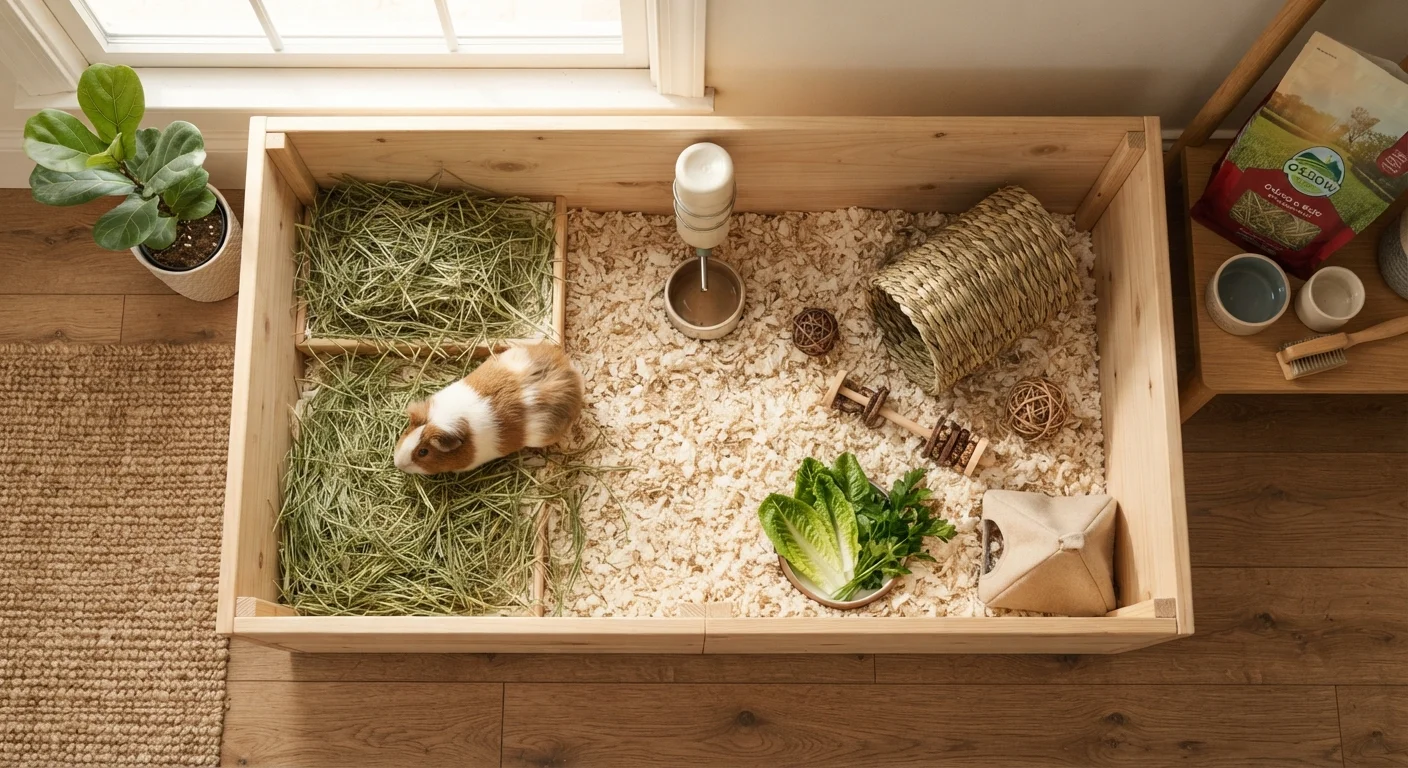
A neatly prepared small pet enclosure with hay, water bottle, hideout, and enrichment toys ready for a new arrival

Key Takeaways

Set up and fully equip the enclosure at least 24 hours before your pet arrives.
Small pets are prey animals — they need quiet, low-pressure settling time in the first 48 hours.
Find an exotic-savvy vet before your pet comes home, not after a health concern appears.
Monitor food intake, droppings, and behavior daily during the first week — changes can signal illness.
Species-specific needs vary significantly; confirm dietary and housing requirements for your exact pet.
45–90 min

Summary

24 items · 45–90 minutes

Why the First Week Sets the Tone

Rabbits, guinea pigs, birds, hamsters, and other small pets are prey animals by nature. Their stress responses are acute and their ability to hide illness is remarkably well-developed. A chaotic or poorly prepared arrival can trigger prolonged fear, suppress appetite, and — in the worst cases — contribute to serious health decline. Getting the fundamentals right before your new pet crosses the threshold dramatically improves outcomes.

This checklist is organized into three phases: before arrival (enclosure prep and supplies), the first 24–48 hours (safe introduction), and the first full week (monitoring and acclimation). Use it alongside species-specific resources — for example, our complete first-time rabbit owner guide covers housing, diet, and veterinary care in depth for rabbit owners specifically.

Before Arrival: Enclosure Setup

Choose an enclosure sized appropriately for your species — verify minimum dimensions against current exotic-vet or humane society guidelines, not pet store minimums. Must
Position the enclosure away from drafts, direct sunlight, loud speakers, and high-traffic household areas. Must
For birds, review placement against common indoor hazards such as nonstick cookware fumes, scented candles, and aerosol sprays — see our safe bird enclosure setup guide for a full hazard list. Must
Line the enclosure with a species-appropriate, dust-free substrate or bedding — avoid cedar and pine shavings, which emit aromatic compounds linked to respiratory irritation in small mammals. Must
Install at least one enclosed hideout or shelter so the animal has a retreat from perceived threats. Must
Set up food and water delivery systems (bottles, bowls, hay racks) and confirm they are functional and clean before the animal arrives. Must
Add species-appropriate enrichment items — at minimum one chew or forage item — before arrival so the enclosure feels lived-in rather than sterile. Should

Before Arrival: Household Preparation

Identify and contact an exotic-animal or avian veterinarian in your area before your pet comes home — availability for non-dog/cat species varies significantly by region. Must
Inform all household members — especially children — of handling rules and quiet-zone expectations around the enclosure for the first week. Must
Secure or remove household hazards in any room where your pet will have supervised free time: exposed wiring, toxic houseplants, open water sources, and gaps behind furniture. Must
Purchase enough species-correct food for at least two weeks, including the same brand or hay type the pet was eating previously to avoid sudden dietary changes. Must
Prepare a transport carrier lined with familiar-smelling bedding if you are collecting the pet yourself. Should

First 24–48 Hours: Safe Introduction

Place the animal directly into its prepared enclosure with minimal handling; allow it to exit the carrier into the enclosure at its own pace. Must
Keep the room quiet and dimly lit for the first several hours to reduce sensory overload. Must
Offer fresh food and water immediately, but do not be alarmed if intake is minimal in the first 12–24 hours — stress suppresses appetite in prey animals. Must
Limit handling to zero or near-zero for the first 48 hours; observe calmly from a distance to allow the animal to begin mapping its environment. Must
Check for visible signs of injury or illness that may have been missed at point of sale: labored breathing, discharge from eyes or nose, obvious wounds, or extreme lethargy. Must
Avoid introducing the new pet to existing household pets during this phase — wait until the newcomer is eating, exploring, and displaying relaxed posture. Should

Days 3–7: Monitoring and Early Bonding

Conduct a daily welfare check: confirm food and water consumption, inspect droppings for changes in volume, consistency, or color, and note activity levels. Must
Begin brief, low-pressure interaction sessions — sitting near the enclosure and speaking quietly before attempting direct contact. Should
Schedule a new-pet wellness exam with your exotic vet within the first two weeks, even if the animal appears healthy — many conditions are only detectable on examination. Must
Begin a simple care log recording daily observations; this record becomes invaluable if a vet consultation is needed. Should
Introduce enrichment items gradually rather than all at once to avoid overwhelming a still-acclimating animal. Nice to have

Tools and Supplies to Have Ready

Having the right equipment assembled before your pet arrives prevents last-minute scrambles that disturb a settling animal. Species needs vary considerably — a budgie's requirements differ from a guinea pig's — so consult reputable care sheets from avian or exotic animal veterinary organizations for your exact species. The items below represent the core categories applicable across most small and exotic pets.

Required

Species-appropriate enclosure

Provides the primary living space; size and design requirements vary substantially by species.

Required

Dust-free bedding or substrate

Lines the enclosure floor to absorb waste and support natural behaviors like burrowing.

Required

Water bottle or ceramic bowl

Delivers fresh water; the appropriate type depends on species and individual preference.

Required

Species-correct food and hay

Provides nutrition; matching the previous owner's food brand reduces digestive upset during transition.

Required

Enclosed hideout or shelter

Gives prey animals a secure retreat, which is essential for reducing chronic stress.

Required

Transport carrier

Used to bring the animal home safely; lined with bedding to reduce transit stress.

Optional

Digital kitchen or postal scale

Allows weekly weight monitoring — a reliable early indicator of health changes in small animals.

Optional

Basic care log or notebook

Tracks daily food intake, droppings, and behavioral observations during the settling period.

Avoid Sudden Diet Changes During Transition

Switching food brands or hay types at the same time as a housing change compounds stress and can trigger digestive upset — particularly in rabbits and guinea pigs, whose gut flora are sensitive to abrupt changes. Obtain at least a small supply of whatever the animal was eating previously and transition to any new diet gradually over 7–10 days. If the previous diet was nutritionally inadequate, consult an exotic vet before making changes.

First-Week Monitoring and What to Watch For

The first seven days are a critical observation window. Small animals rarely display obvious distress until a problem is advanced, which is why daily baseline checks matter so much. Note your pet's typical resting posture, activity timing, and normal droppings early on — those baselines make deviations far easier to spot. Our article on signs of illness in small animals explains which subtle behavioral and physical changes warrant prompt veterinary attention.

Socialization should begin gently and on the animal's terms. Avoid handling for the first 48 hours unless medically necessary. When you do begin interaction, keep sessions short and positive. Building trust without stress takes time — rushing the process typically backfires and extends the period before your pet feels safe. For guinea pig owners specifically, companionship is a welfare need, not a luxury; see our guide on why guinea pigs get lonely for pairing guidance. Enrichment should also be introduced gradually — enrichment for small animals covers foraging toys and free-roaming strategies that reduce stress once your pet has settled.

Rabbits and Guinea Pigs Can Decline Rapidly When Unwell

Unlike dogs and cats, rabbits and guinea pigs have evolved to mask illness as a survival strategy — by the time symptoms are obvious, the condition may already be advanced. A rabbit that stops eating for more than 12–24 hours, or a guinea pig that becomes lethargic and hunched, requires prompt veterinary evaluation, not a wait-and-see approach. Do not delay contacting an exotic-animal vet if you notice these signs during the first week.

This article provides general educational information and is not a substitute for advice from a qualified exotic animal or avian veterinarian familiar with your specific pet's species and individual health history.

Pets & Animals Editorial Team is the collective byline for our editorial team and contributor network. Articles published under this byline or an editorial pen name are researched, written, and reviewed according to our editorial standards for clarity, consistency, and independence before publication.

View all articles by Pets & Animals Editorial Team →
Disclaimer: The content provided on our blog site traverses numerous categories, offering readers valuable and practical information. Readers can use the editorial team’s research and data to gain more insights into their topics of interest. However, they are requested not to treat the articles as conclusive. The website team cannot be held responsible for differences in data or inaccuracies found across other platforms. Please also note that the site might also miss out on various schemes and offers available that the readers may find more beneficial than the ones we cover.