

Key Takeaways
Start here
Is a Rabbit Right for You?
Set up first
Housing and Environment Essentials
Then learn
Feeding Your Rabbit Correctly
Build the bond
Handling, Socialization, and Behavior
Stay healthy
Veterinary Care and Health Basics
Be prepared
What Surprises Most New Rabbit Owners
Is a Rabbit Right for You?
Rabbits are often mistaken for low-maintenance starter pets. In reality, they are intelligent, social animals with specialized needs that require genuine commitment. Before acquiring one, read our honest overview of rabbit ownership to understand the full picture - including lifespan, cost, and behavioral complexity.
Rabbits typically live 8-12 years, need daily interaction, rabbit-specific veterinary care, and a diet most people are unfamiliar with. They are also prey animals that rarely seek to be held and communicate subtly. Households with unpredictable noise, very young children, or other predatory pets should plan accordingly before bringing a rabbit home.
Gastrointestinal stasis
A serious condition in which a rabbit's digestive system slows or stops moving, often caused by inadequate hay intake, stress, or illness. It can become life-threatening quickly and requires veterinary attention.
Binky
A spontaneous leap and twist a rabbit performs in mid-air, widely recognized as a clear expression of happiness and comfort in their environment.
Hay-based diet
A feeding approach in which unlimited grass hay forms the majority of a rabbit's daily food intake, providing essential fiber for digestive health and dental wear.
Rabbit-proofing
The process of modifying a living space to remove or protect items a free-roaming rabbit could chew, knock over, or be injured by - including electrical cords, toxic plants, and small gaps.
Prey animal behavior
The natural instincts and stress responses of animals that are hunted in the wild. Rabbits are prey animals, meaning they instinctively hide signs of illness and startle easily when feeling threatened.
Exotic veterinarian
A veterinarian with specialized training or experience treating animals other than dogs and cats, including rabbits, birds, reptiles, and small mammals. Not all general practice vets are equipped to treat rabbits.
Housing and Environment Essentials
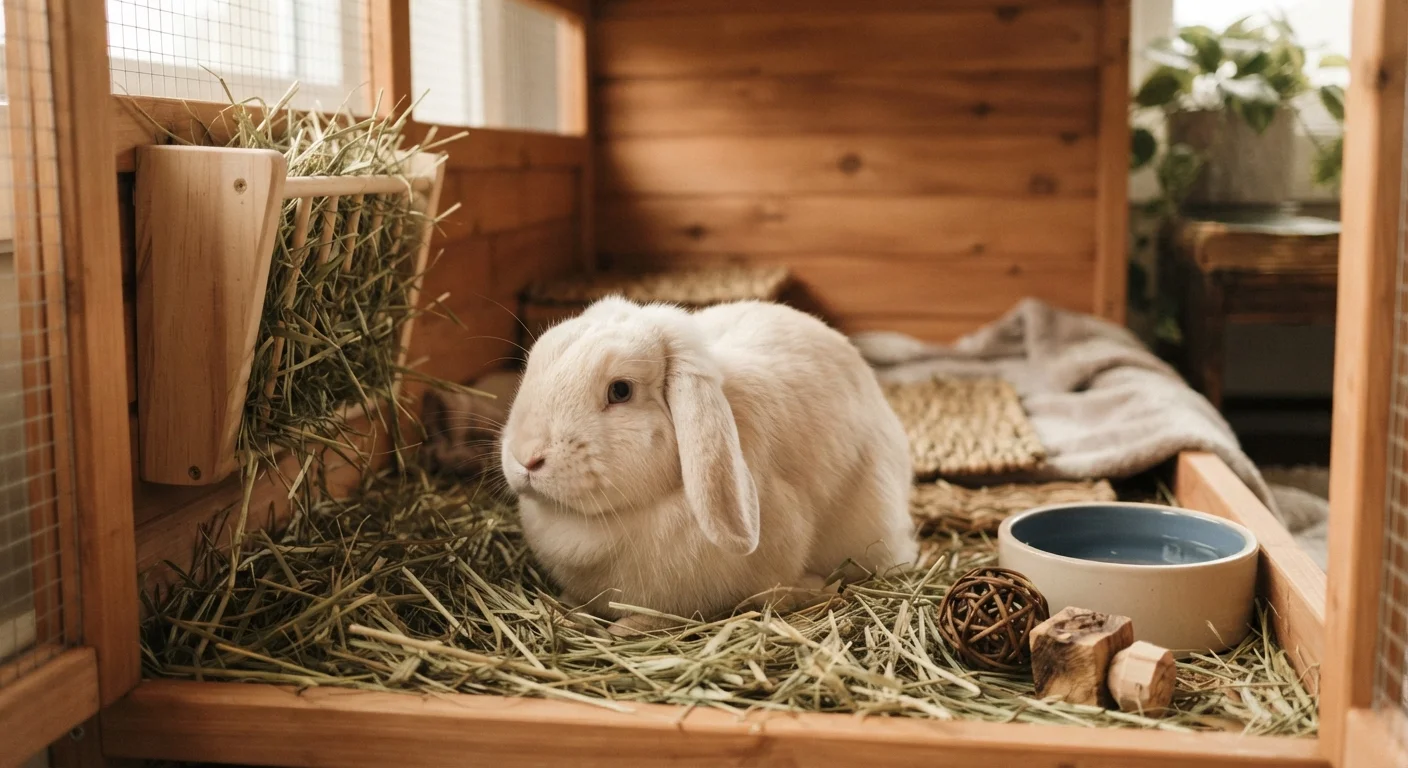
The enclosure you provide sets the foundation for your rabbit's physical and psychological health. Traditional small wire cages are generally inadequate. Rabbit welfare organizations typically recommend a minimum living area of 8 square feet, with additional daily free-roam time in a secured, rabbit-proofed room or pen.
Rabbit-proofing means covering electrical cords, blocking access to baseboards and furniture legs, and removing toxic houseplants. Within the enclosure, rabbits need a solid or tightly-woven floor (wire flooring can injure their hocks), a litter box filled with paper-based litter and topped with hay, hiding spaces, and enrichment toys such as untreated wood chews or cardboard tunnels. Temperature matters too - rabbits are sensitive to heat above approximately 85°F and should never be housed in direct sunlight or drafts.
Our new small pet arrival checklist covers what to prepare before your rabbit even crosses the threshold.
Feeding Your Rabbit Correctly
Nutrition is one of the most misunderstood aspects of rabbit care. Unlimited grass hay - timothy hay for adults, orchard grass as an alternative - must form 80-90% of the diet. It keeps the digestive system moving and wears down continuously growing teeth. Without adequate hay, rabbits are at significant risk for gastrointestinal stasis, a serious and potentially life-threatening condition.
Fresh leafy greens (such as romaine lettuce, cilantro, or parsley) can be offered daily in moderate amounts. High-quality, age-appropriate pellets serve as a supplement in small quantities - not a meal replacement. Many foods commonly assumed to be rabbit-friendly, including iceberg lettuce, certain fruit seeds, and starchy vegetables, can cause real harm. For a detailed breakdown, see our guide to rabbit diet balance.
Introduce New Foods Gradually
When offering fresh vegetables for the first time, introduce one type at a time in small quantities and monitor your rabbit's droppings over 24 hours. Rapid dietary changes can disrupt the delicate gut flora rabbits depend on for digestion. A slow, measured introduction reduces the risk of digestive upset.
Handling, Socialization, and Behavior
Rabbits communicate primarily through body language. A relaxed rabbit may binky (leap and twist mid-air), loaf (tuck all feet beneath their body), or groom themselves near you - all signs of comfort. A thumping back foot signals fear or irritation. Lunging or growling indicates the rabbit feels threatened.
Picking up a rabbit requires support of both the hindquarters and chest simultaneously. Rabbits have powerful hind legs and fragile spines; a startled rabbit that kicks free can suffer serious spinal injury. Most rabbits prefer floor-level interaction - sitting quietly near them and allowing approach on their terms builds trust far more effectively than forced handling. See our evidence-informed guide to handling small pets for a gradual approach that works with the animal's instincts rather than against them.
Veterinary Care and Health Basics
Not all veterinarians are trained to treat rabbits. Before bringing one home, locate a veterinarian with documented experience in exotic or small mammal medicine. An initial wellness exam after adoption establishes a health baseline and gives you a resource for questions that arise in early ownership.
Rabbits hide illness well - a survival trait from their prey-animal nature. Warning signs that warrant prompt veterinary contact include changes in appetite or fecal output, lethargy, labored breathing, head tilt, or a hunched posture. Gastrointestinal stasis can progress rapidly. Spaying or neutering is strongly recommended by most rabbit veterinarians: it reduces the risk of certain reproductive cancers in females and often improves behavior in both sexes.
Don't Wait on Veterinary Signs
A rabbit that has not eaten, produced droppings, or shown interest in activity for more than a few hours should be seen by a veterinarian as soon as possible - not observed at home overnight. Gastrointestinal stasis and other conditions can deteriorate rapidly in rabbits. When in doubt, call your exotic vet rather than waiting for symptoms to resolve on their own.
What Surprises Most New Rabbit Owners
New owners are frequently caught off-guard by a few consistent realities. First, rabbits are not quiet or passive. They vocalize, chew persistently, rearrange their environment, and can be quite destructive if under-stimulated. Second, litter training is achievable - rabbits naturally choose one or two spots to eliminate - but it takes consistency and patience in the first weeks.
Third, grooming needs are real. Most rabbit breeds require regular brushing to prevent ingested fur from contributing to digestive blockages. Long-haired breeds need daily attention. Finally, the bond rabbits form with trusted humans can be genuinely deep and rewarding, but it rarely develops overnight. Owners who approach rabbits with patience and respect often describe them as among the most engaging companion animals they have kept.
This article provides general educational information about rabbit care and is not a substitute for guidance from a qualified exotic animal veterinarian familiar with your specific rabbit.