

Key Takeaways
Why Small Pets Require a Different Approach to Socialization
Socialization for small and exotic pets is often misunderstood. Many owners approach rabbits, guinea pigs, hamsters, and pet birds with the same expectations they'd bring to a dog or cat - and encounter confusion when the animal retreats, freezes, or resists handling. The root difference is evolutionary: small pets are prey species, hardwired to treat unfamiliar stimuli as potential threats.
This does not mean bonding is impossible. It means the process must be built on the animal's terms. Common misconceptions about small animals - such as the idea that rabbits naturally enjoy being picked up - can set unrealistic expectations that undermine the relationship from day one. Understanding the animal's baseline behavior is the essential starting point.
Small Pets Are Not Domesticated Like Dogs
Rabbits, guinea pigs, hamsters, and most bird species retain strong prey-animal instincts even after generations in captivity. Unlike dogs, they were not selectively bred over millennia for human companionship. This means tolerance for handling is learned gradually, not assumed - and some individuals may never become fully comfortable being picked up. Respecting this is not a failure; it reflects accurate understanding of the animal.
Foundational Practices for Building Trust Safely
Effective socialization follows a consistent progression: presence, then proximity, then contact, then handling. Skipping stages forces the animal into defensive responses and can set progress back considerably. The practices below apply broadly across species, though the pace and specific techniques will vary.
For new arrivals in particular, the first week matters enormously. Refer to the new small pet arrival checklist for a structured approach to those critical early days before handling attempts begin.
Species-Specific Handling Guidance
Rabbits
Rabbits are social but rarely enjoy being lifted off the ground - their instinct when airborne is to kick powerfully, which can fracture their own spine if unsupported. Ground-level interaction, where the rabbit approaches voluntarily, is far more productive than repeated picking-up attempts. When lifting is necessary (for health checks, transport), scoop from beneath with one hand supporting the hindquarters fully.
Guinea Pigs
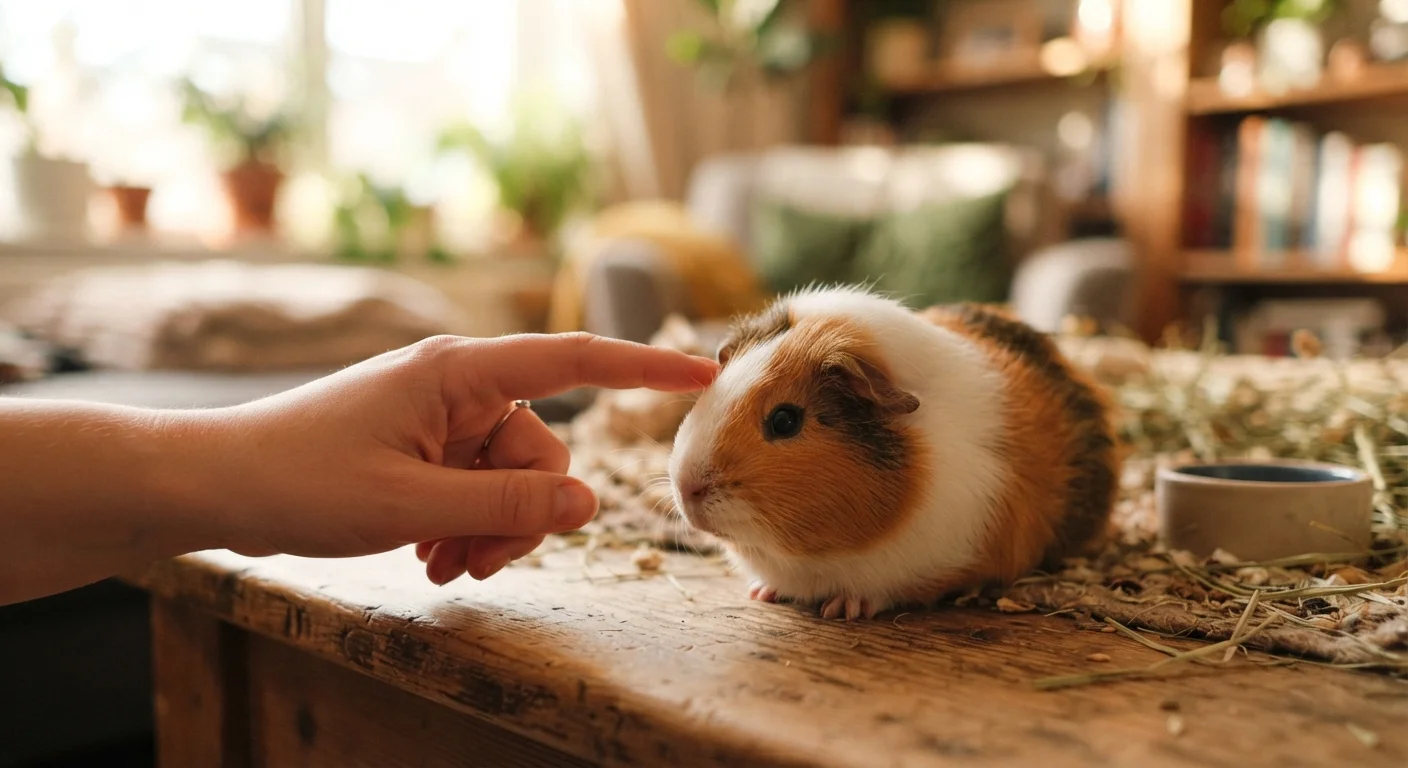
Guinea pigs are generally more tolerant of handling than rabbits or hamsters, particularly when socialized consistently from a young age. Use both hands to scoop from below, keeping the animal close to your body. They communicate through a range of vocalizations - a relaxed purr differs markedly from teeth-chattering, which signals agitation.
Hamsters
Hamsters are crepuscular (most active at dawn and dusk), so daytime handling attempts often startle a sleeping animal. Wait until the hamster is naturally awake. Cupped-hand technique - letting the hamster walk onto your palm rather than being grabbed - reduces nipping and builds confidence incrementally. See our comparison of hamster and gerbil handling needs for how rodent species differ.
Pet Birds
Birds form strong social bonds but require patient step-up training - teaching the bird to step onto a finger or perch on cue - rather than being grabbed from the cage. Forcing contact typically produces fear responses and biting. Consistency, short sessions, and positive reinforcement with preferred treats are the basis for most avian taming. Our guide to bird species temperament and care demands provides useful context on species-level variation in sociability.
Quick-Start Actions You Can Take Today
Building trust does not require long, intense sessions - small, consistent, low-pressure interactions compound into significant progress over weeks. The following actions are appropriate for most small pet species beginning at any stage of familiarity.
Pairing these interactions with enrichment - foraging opportunities, tunnels, and supervised exploration time - reinforces positive associations with the broader environment, not just with your hands. The role of enrichment in reducing stress in small animals is well supported and directly complements socialization efforts.
When Progress Stalls - and When to Seek Help
Some animals make slower progress due to prior negative experiences, individual temperament, or underlying health issues that make handling painful or uncomfortable. If an animal that was previously tolerant of handling suddenly becomes defensive or aggressive, a veterinary check is warranted before resuming socialization efforts - pain is a common and often overlooked cause.
Animals with significant fear histories may benefit from a behavior consultation with a professional experienced in prey-species behavior. Finding the right vet is its own challenge for small pet owners; the exotic vet gap article outlines what to look for in a qualified exotic-animal practitioner.
“The goal of socialization is not to make an animal tolerate handling - it's to create conditions where the animal chooses to engage. That distinction matters enormously for long-term welfare.”
— Dr. Susan Friedman, Behavioral psychologist and applied behavior analysis educator specializing in animal learning
This article provides general educational information about small pet handling and is not a substitute for advice from a qualified exotic animal veterinarian or certified animal behaviorist. Consult a professional if your pet shows signs of distress, injury, or significant behavioral change.