

Key Takeaways
Option A
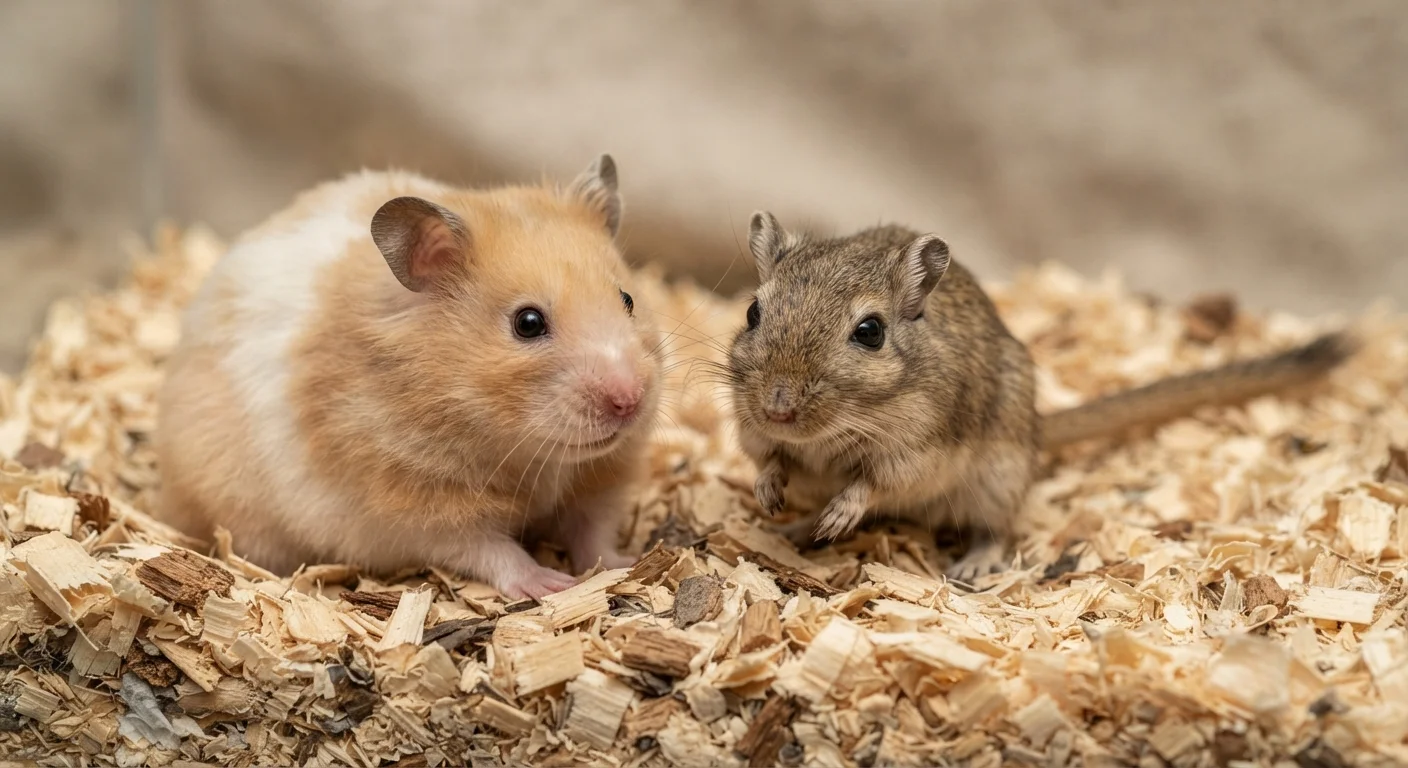
Hamster
The solitary, low-maintenance nighttime companion.
Best for: Owners who prefer a pet that's active in the evening and comfortable living alone.
Option B
Gerbil
The social, curious daytime explorer.
Best for: Owners who want an interactive pair of pets that are active during daylight hours.
If you have a predictable evening routine and prefer a single pet
Hamster
Hamsters are naturally nocturnal and do well solo, making them a good fit for owners who are home and available in the evenings.
If you want pets that are active and observable during the day
Gerbil
Gerbils are crepuscular and diurnal, meaning you'll see much more activity during waking hours compared to a hamster.
If you want to keep two small pets together in the same enclosure
Gerbil
Gerbils are social by nature and do best in bonded pairs or small same-sex groups; hamsters typically cannot be safely housed together.
If you're introducing a small pet to a child aged 8 or older
Gerbil
Gerbils are generally quicker to accept gentle handling, though adult supervision remains essential for either species.
If you want a pet with a slightly calmer, less escape-prone temperament
Hamster
Hamsters tend to be less frantically active than gerbils, though they still require secure enclosures and regular enrichment.
Social Needs: Solitary vs. Colony Animals
One of the most consequential differences between hamsters and gerbils is how they relate to their own kind. Hamsters - including the popular Syrian hamster - are strictly solitary. In the wild, adults actively defend territory from other hamsters. Attempting to house two Syrians together almost always results in severe fighting, and even dwarf hamster species that tolerate company more often than not still end up in conflict as adults. The general veterinary consensus is that Syrian hamsters must live alone.
Gerbils, by contrast, are colony animals native to social burrow systems. A gerbil kept alone is widely considered to be at risk of chronic stress and reduced quality of life. Most exotic animal veterinarians and animal welfare organizations recommend keeping gerbils in bonded same-sex pairs or small groups introduced at a young age. This is a meaningful commitment - you are effectively signing up for two pets, not one.
This distinction alone often resolves the hamster-vs-gerbil decision. If your household, budget, or space supports only a single small animal, a hamster is the biologically appropriate choice. If you can commit to a pair, gerbils offer the reward of watching genuinely interactive social behavior. See our small pet myths article for more on why the "hamsters are fine alone" framing gets misapplied to gerbils.
Activity Patterns and Handling
Hamsters are primarily nocturnal. A Syrian hamster may sleep through most of the day and become active well after sunset. Disturbing a hamster during deep daytime sleep can trigger a stress response - and sometimes a bite - not because the animal is aggressive, but because it has been startled from rest. This is important context for households expecting daytime interaction.
Gerbils follow a different pattern. They are crepuscular and polyphasic sleepers, meaning they cycle through activity and rest in short bursts across both day and night. In practice, this makes them significantly more visible and interactive during normal waking hours.
On handling: both species can become comfortable with regular, gentle interaction, but gerbils tend to acclimate somewhat faster as a species. They are naturally inquisitive and less inclined to freeze or flee compared to the average hamster. That said, individual personality matters enormously in both species. Our guide to handling and socialization in small pets covers species-appropriate taming approaches in detail.
| Criterion | Hamster | Gerbil |
|---|---|---|
| Social needs | Solitary - must live alone | Social - needs a companion |
| Activity pattern | Primarily nocturnal | Active in daytime bursts |
| Typical lifespan | 2-3 years | 3-4 years |
| Minimum enclosure | 600+ sq in floor space | 20+ gallon for a pair |
| Handling ease | Moderate; sleep-sensitive | Generally quicker to tame |
| Number to keep | One per enclosure | Two or more recommended |
| Key health concern | Wet tail, dental issues | Seizures, dental overgrowth |
Space, Enrichment, and Housing
Both hamsters and gerbils are routinely undersold on space requirements. The small wire cages commonly sold as starter kits are widely considered inadequate by veterinary and animal welfare standards. Syrian hamsters in particular are now recommended to have enclosures with a minimum of 600-800 square inches of floor space, with deep substrate for burrowing - a behavior that is essential, not optional, for their psychological wellbeing.
Gerbils also need burrowing depth, but their social nature adds another layer: the enclosure must comfortably accommodate two or more animals with enough territory to avoid conflict. A 10-gallon tank is generally considered a bare minimum for a pair, with larger being consistently better.
Enrichment priorities differ slightly. Hamsters benefit enormously from a large, solid-surface exercise wheel (at minimum 10-11 inches in diameter for a Syrian), tunnels, and deep bedding. Gerbils enjoy tunneling as well, but also show strong interest in chewing and social play. Both species should have hides, foraging opportunities, and safe chewing materials. If you're researching enclosure standards for small animals more broadly, our guinea pig housing guide illustrates how dramatically commercial cage sizing tends to underserve small pets.
600 sq in
Minimum recommended floor space for a Syrian hamster
Animal welfare organizations such as the RSPCA cite 600-800+ square inches as a minimum, far exceeding most commercial starter cages.
~30%
Gerbils estimated to show epileptiform seizures
Research suggests a notable proportion of pet gerbils experience mild seizure activity, often hereditary, though severity varies widely.
Health, Lifespan, and Veterinary Considerations
Both hamsters and gerbils have relatively short lifespans compared to larger companion animals - typically 2 to 3 years for hamsters and 3 to 4 years for gerbils, though individual variation exists. Prospective owners should understand this reality before committing, particularly in households with children.
Common health concerns in hamsters include dental problems, wet tail (a serious bacterial gastrointestinal condition), and age-related tumors. Gerbils are prone to epileptiform seizures - a relatively common and often hereditary condition - as well as dental overgrowth and, in older animals, tumors of the scent glands.
Both species require a veterinarian experienced with exotic small mammals, which can be harder to find in some areas and generally costs more per visit than routine dog or cat care. Owners should research exotic vet availability and consider potential costs before acquiring either species. Neither hamsters nor gerbils are low-maintenance pets in the truest sense - they simply have different demands than larger animals.
This article is for general informational purposes only and does not constitute veterinary advice. Always consult a qualified exotic animal veterinarian for guidance specific to your pet's health and care needs.