

Key Takeaways
Guinea Pig Housing Requirements
Guinea pig housing requirements refer to the minimum and recommended standards for cage size, flooring type, ventilation, temperature range, and enrichment that allow guinea pigs to express natural behaviors and maintain good physical and mental health. These standards are set by veterinary and animal welfare organizations based on the species' social nature, mobility needs, and sensitivity to environmental stress. Meeting these requirements is foundational to responsible ownership.
Guinea pigs (Cavia porcellus) are cursorial prey animals - they rely on open space and the ability to flee, meaning confined or visually bare enclosures can trigger chronic low-level stress responses detectable in cortisol studies.
Why Cage Size Is the First and Most Common Problem
Walk through the small animal aisle of most pet retailers and you'll find cages marketed specifically for guinea pigs that fall well below established welfare standards. This isn't a minor technicality - inadequate floor space directly restricts a guinea pig's ability to thermoregulate through movement, engage in the extended running sequences they perform naturally, and maintain healthy muscle tone. It also amplifies stress-related behaviors like barbering, teeth chattering, and repetitive pacing.
The HSUS and similar organizations recommend a minimum of 7.5 square feet of floor space for two guinea pigs - a number many commercial cages don't meet even for one. The dimensions of that space matter as much as the total area: guinea pigs benefit from long, horizontal runs rather than tall structures. Ramps and multi-level platforms don't substitute meaningfully for ground-level square footage, because these animals navigate primarily at floor level.
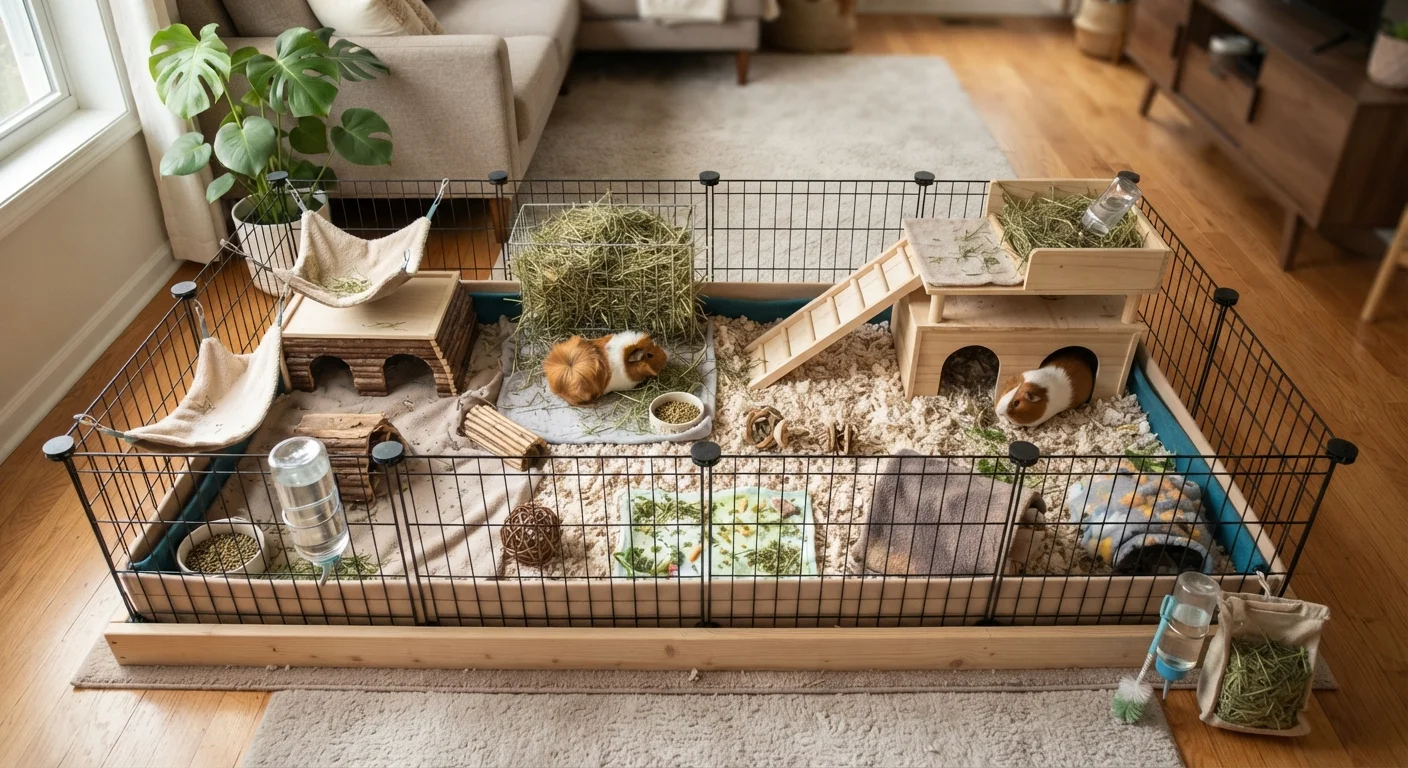
As a practical benchmark, a 2-by-4-foot footprint represents a workable starting point for a pair, with 2-by-5 feet offering noticeably better quality of life. C&C (cube and coroplast) style enclosures have become popular in the guinea pig community precisely because they allow owners to build to appropriate dimensions at reasonable cost.
Aquariums Are Not a Suitable Substitute
Fish tanks and solid-walled enclosures are sometimes used for guinea pigs, but their sealed design traps heat, moisture, and ammonia - all of which negatively affect guinea pig respiratory health. Open-top or well-ventilated mesh-sided enclosures are far more appropriate for this species. If a solid-sided structure is used, supplemental ventilation and extremely frequent cleaning become necessary to compensate, though they don't fully replicate the airflow of a mesh enclosure.
As you plan your setup, see our guide to guinea pig social needs - space requirements and companionship are closely linked decisions that should be made together.
Flooring, Bedding, and the Risk of Bumblefoot
Pododermatitis - commonly called bumblefoot - is one of the most preventable conditions in captive guinea pigs, and wire or mesh flooring is its primary cause in domestic settings. Wire floors place sustained pressure on the footpads, abrading skin and creating entry points for bacterial infection. Once established, bumblefoot is painful, difficult to treat, and can become serious if not addressed promptly by a veterinarian.
Solid flooring is non-negotiable. Within that, the bedding layer serves multiple functions: it cushions the feet, absorbs urine to reduce ammonia buildup, provides material for burrowing, and contributes to thermal comfort. Appropriate choices include:
- Paper-based bedding - absorbent, low-dust, and widely available
- Fleece liners over an absorbent underlayer - reusable and gentle on feet when properly maintained
- Hay as a supplemental layer in feeding zones, since guinea pigs naturally forage and rest in hay
Cedar and pine shavings are not appropriate. The aromatic oils (phenols) in these wood types are associated with respiratory irritation and potential liver stress with extended exposure. Kiln-dried pine is sometimes considered lower-risk, but paper bedding and fleece remain the most widely recommended options by small animal veterinarians.
Spot-Check Hygiene Daily
Guinea pigs produce a high volume of waste relative to their size, and ammonia from urine builds up quickly in enclosed spaces. Spot-cleaning soiled bedding every day - not just during full cage changes - significantly reduces respiratory irritation and the risk of skin infections. Full bedding changes at least once a week are standard practice for most setups.
Ventilation, Temperature, and Placement
Guinea pigs require good airflow but are simultaneously vulnerable to drafts and temperature extremes. The right placement of an enclosure threads a narrow path: enough air circulation to prevent ammonia and humidity buildup, without exposing animals to cold air currents or overheating from sunlight or heat sources.
The safe ambient temperature range sits roughly between 65°F and 75°F (18-24°C). Guinea pigs cannot sweat effectively and are prone to heatstroke at temperatures above approximately 80°F - a risk that rises sharply when humidity is also high. Conversely, damp and cold conditions stress their respiratory systems and suppress immune function.
Practical placement guidelines:
- Avoid windowsills or any position with direct sun exposure at any time of day
- Keep away from exterior doors, air conditioning vents, and baseboard heaters
- Choose a room where temperature stays relatively stable, not a garage or uninsulated basement
- Ensure the enclosure has an open top or mesh sides for airflow - solid-sided aquariums trap heat and ammonia
Solid-sided tanks are frequently marketed for guinea pigs, but their poor ventilation makes them poorly suited to this species. Open-top or well-meshed enclosures provide the airflow guinea pigs need. Safe enclosure placement principles for pet birds share similar logic and are worth reviewing alongside guinea pig-specific guidance.
Enrichment as a Structural Requirement
A correctly sized, properly floored enclosure is still incomplete without enrichment. For guinea pigs, enrichment means structures and opportunities that allow the expression of natural behaviors: hiding, foraging, exploring, and social interaction. Without these elements, even a spacious cage becomes a sterile environment that leads to boredom, stress, and what behaviorists call stereotypic behavior - repetitive, purposeless movements with no environmental function.
Essential enrichment features include:
- Multiple hides - one per guinea pig at minimum, since guinea pigs need to retreat simultaneously without competition
- Tunnels that allow full-speed movement and directional choices
- Hay stations positioned to encourage foraging posture and dental wear
- Varied textures - untreated wood chews, cardboard structures, grass mats
Supplemental floor time outside the enclosure extends the enrichment budget significantly. A guinea-pig-proofed room or a large exercise pen on a safe floor surface gives animals the opportunity to run extended distances and investigate novel environments - activities their physiology is designed for.
For a deeper treatment of this topic, our article on enrichment for small animals addresses the behavioral science behind why a cage alone is never sufficient for guinea pigs or other small species. It's also worth reviewing common small pet myths - the idea that guinea pigs need minimal space is one of the most persistent and harmful misconceptions vets encounter.
This article provides general educational information about guinea pig housing and is not a substitute for veterinary advice. If you have concerns about your guinea pig's health or behavior, consult a veterinarian experienced with small exotic animals.