

Key Takeaways
Dynamic Pricing
Dynamic pricing is the practice of automatically adjusting the price of a product or service in real time based on factors like demand, inventory levels, competitor pricing, your location, or browsing behavior. Rather than setting a fixed price, retailers use software algorithms to continuously recalculate what to charge. The goal is typically to maximize revenue by charging what the market will bear at any given moment.
Algorithms driving dynamic pricing may incorporate machine learning models trained on historical sales data, real-time competitor price feeds, and signals derived from session behavior such as repeat visits or cart abandonment.
What Actually Drives Price Changes
When you refresh a product page and the price is different from five minutes ago, that is dynamic pricing in action. Retailers deploy algorithmic systems that pull in multiple data streams and recalculate an optimal price continuously. The main inputs include:
- Demand signals: How many people are viewing or purchasing that item right now.
- Inventory levels: Scarcity drives prices up; surplus pushes them down.
- Competitor pricing: Automated scrapers monitor rival sites and trigger price adjustments to stay competitive.
- Time of day and day of week: Shopping patterns influence when prices peak or dip.
- Your session data: Return visits, cart additions, and device type can all feed into the price you are shown.
This is distinct from simple seasonal discounting. Seasonal pricing patterns follow predictable calendars; dynamic pricing operates on a minute-by-minute basis with no fixed rhythm.
Millions/day
Price changes on large e-commerce platforms
Industry analyses have documented that major retail platforms can execute millions of individual price adjustments daily across their full product catalogs.
~72%
US consumers unaware prices vary by user
Consumer research has indicated that a large majority of online shoppers do not realize the price they see may differ from what another shopper sees for the same item at the same time.
1970s
Era when airline yield management began
Dynamic pricing in commercial contexts traces to airline yield management systems developed in the 1970s and 1980s, which varied seat prices based on booking timing and demand.
Why "Sale" Prices Can Be Misleading Under This Model
Dynamic pricing complicates the traditional idea of a sale. A product labeled "20% off" might have had its baseline price quietly inflated before the promotion, meaning the discount is measured against an artificial reference point rather than the genuine prior price. This is closely related to the tactics explored in the anatomy of a sale, where discounts can be real markdowns or manufactured urgency.
Price-history tools - browser extensions or standalone websites that log a product's price over time - let you view actual historical data and judge whether a current "deal" is genuinely lower than the norm. They do not capture every price point, but a multi-week chart is far more informative than a retailer's stated "was" price.
Use Price History Before Trusting a 'Sale'
Before accepting a discounted price at face value, look up the item's price history using a browser extension or third-party tracking site. A genuine markdown will appear as a clear drop from a stable prior price. If the chart shows the 'original' price was only set briefly before the promotion, the discount may be less meaningful than advertised.
Understanding how retailers set prices and what markups mean gives useful context for evaluating whether a dynamic price is actually a good value, or simply the current market-clearing figure for that moment.
Personalization: When the Price Is Tailored to You
Beyond market-level adjustments, some pricing systems introduce personalization - meaning the price you see is influenced by data specific to your session or profile. Geographic location is a common variable; a shopper in a high-income zip code may be shown a different price than one in a lower-income area. Device type has also been documented as a pricing factor in some studies, with mobile and desktop users occasionally seeing different figures.
Login status matters too. When you are signed into a retail account, the platform has access to your purchase history, saved items, and browsing patterns - all of which can inform the algorithm. Shopping without an account, in a private browser window, or with location data disabled may present a less personalized - and sometimes lower - price, though outcomes are inconsistent.
This personalization dimension is what separates dynamic pricing from simpler models like loss leader pricing, where a single discounted price is offered broadly to draw shoppers in. With dynamic pricing, the "deal" may exist for some shoppers and not others simultaneously.
Practical Ways to Shop More Strategically
You cannot opt out of dynamic pricing on platforms that use it, but you can reduce its influence on your decisions:
- Check price history before purchasing. A browser extension that charts historical prices turns a retailer's "was" price into a verifiable claim rather than an assertion.
- Browse in a private window. This limits the session data available to the pricing algorithm, though it does not guarantee a lower price.
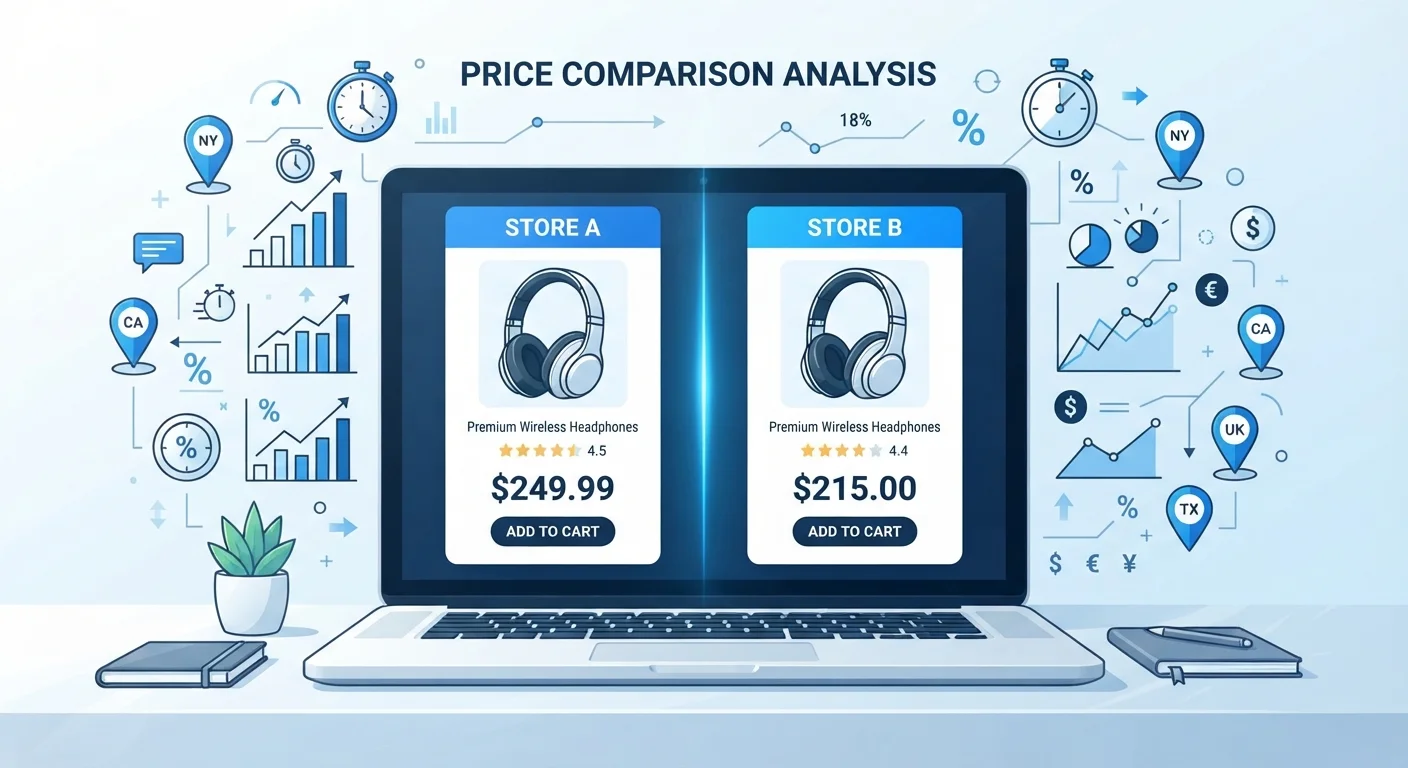
- Compare across platforms. Dynamic pricing is retailer-specific. The same product may be priced very differently on a competing site at the same moment.
- Delay non-urgent purchases. Prices driven by demand often fall once a spike subsides. If you are not in a rush, waiting can be a rational strategy - though it is not guaranteed.
- Understand reference prices critically. When a page shows a "compare at" or "original" price, treat it as a starting point for investigation, not a statement of fact.
The broader context of sale events versus everyday low pricing is also worth understanding - retailers using dynamic pricing often overlay promotional events on top of their algorithmic baseline, which can make price evaluation particularly complex.