

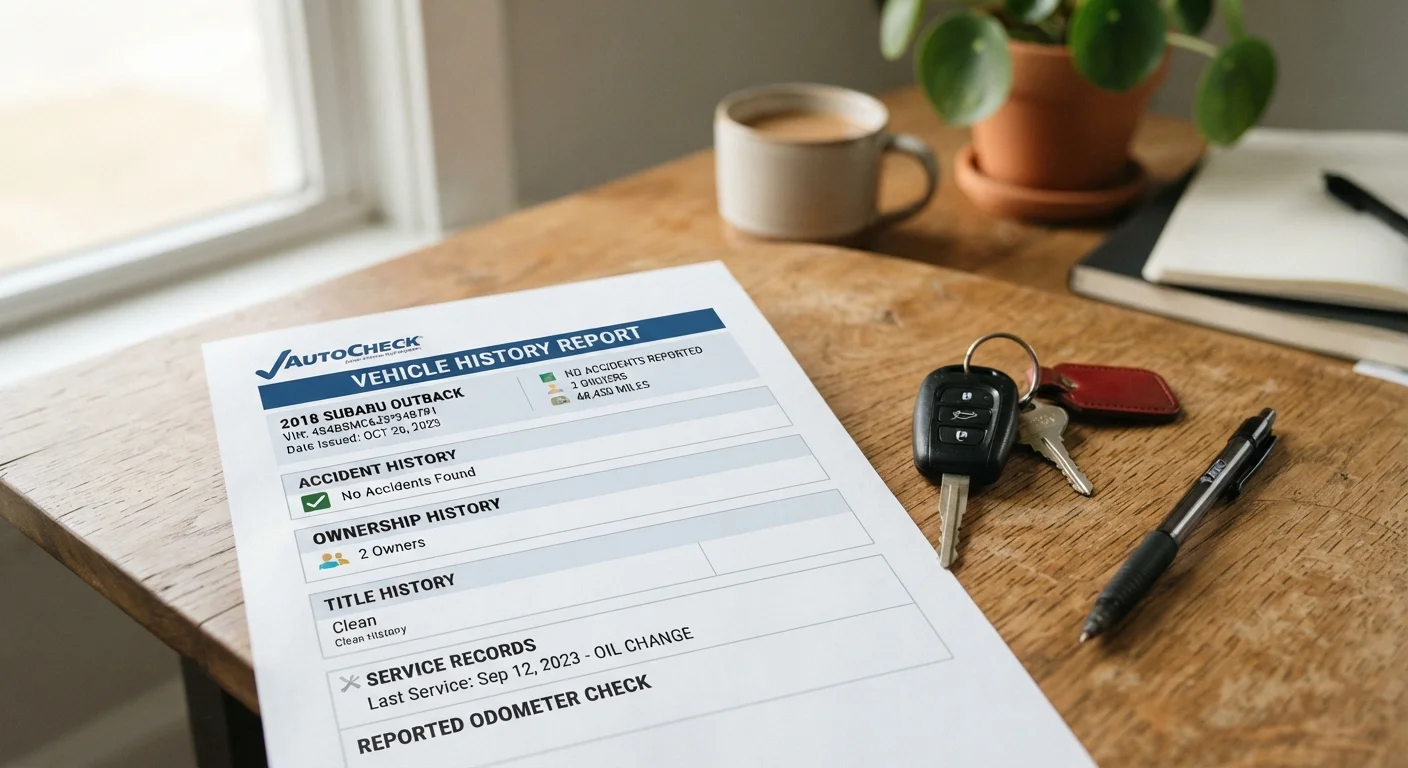
Key Takeaways
Surfaces title red flags before purchase
Salvage, flood, and lemon law designations are recorded at the state level and typically appear reliably on history reports, giving buyers an early warning before they invest time or money in a vehicle.
Can detect odometer rollback fraud
By compiling mileage readings across multiple registration and auction events, reports can reveal inconsistencies that suggest the odometer has been tampered with - a form of fraud that carries federal penalties.
Identifies reported accident history
Insurance-claim and police-report data can flag collisions that a seller might not voluntarily disclose, giving buyers useful leverage in negotiations or a reason to walk away.
Reveals ownership and usage patterns
Knowing a vehicle spent time as a rental, fleet, or lease unit helps buyers calibrate expectations around wear patterns that may not be visible during a standard test drive.
Flags open safety recalls
Many reports link to NHTSA recall data, alerting buyers to unresolved safety issues that the seller is obligated to disclose but may not always volunteer.
Unreported accidents leave no trace
Private collision settlements and cash repairs at independent shops never generate an insurance claim or police report, meaning the history report appears clean despite real damage having occurred.
Maintenance history is not captured
Oil changes, brake jobs, coolant flushes, and other routine service events are almost never entered into the databases history reports draw from, regardless of how diligently a vehicle was maintained.
Coverage varies by state and provider
Not all states contribute records equally to national databases, and different report providers access different data pools - so a vehicle's history may look cleaner than it actually is depending on where it was registered.
A clean report doesn't confirm mechanical condition
No history database tracks wear on engine components, suspension parts, or transmission internals, all of which can be in poor condition even on a vehicle with an unblemished documented record.
Report lag can delay recent events appearing
There is often a processing delay between when an event occurs - such as an accident claim - and when it appears in a report database, meaning very recent incidents may not yet be reflected.
Our Verdict
Vehicle history reports are a genuinely valuable research tool that can surface serious red flags - salvage titles, odometer fraud, and lemon law buybacks - before you commit to a purchase. However, they capture only what has been formally documented, leaving meaningful blind spots around private repairs, unreported collisions, and regional data gaps. Treating a report as one layer of due diligence rather than a final verdict will serve buyers far better.
Any used-vehicle buyer who wants a structured, data-backed starting point for evaluating a car's history before arranging a physical inspection or dealership visit.
What a Vehicle History Report Actually Contains
A vehicle history report aggregates records from a range of sources - state DMVs, insurance companies, auction houses, police databases, and federal agencies - and organises them into a readable timeline tied to a vehicle's VIN. The core categories most reports cover include:
- Title history: Whether the vehicle carries a clean, salvage, rebuilt, flood, or lemon law title designation.
- Odometer readings: Mileage snapshots recorded at registration, inspection, and auction events that can indicate rollback fraud.
- Reported accidents: Collisions flagged through insurance claims or police reports.
- Number of previous owners: How many times the vehicle changed hands and whether it was a personal, fleet, rental, or lease vehicle.
- Open safety recalls: Unresolved manufacturer recalls tied to the VIN at time of report generation.
Before your dealership visit, it's worth pulling a report as part of a broader preparation process - see what else to verify in advance for a fuller pre-visit checklist.
Surfaces title red flags before purchase
Salvage, flood, and lemon law designations are recorded at the state level and typically appear reliably on history reports, giving buyers an early warning before they invest time or money in a vehicle.
Can detect odometer rollback fraud
By compiling mileage readings across multiple registration and auction events, reports can reveal inconsistencies that suggest the odometer has been tampered with - a form of fraud that carries federal penalties.
Identifies reported accident history
Insurance-claim and police-report data can flag collisions that a seller might not voluntarily disclose, giving buyers useful leverage in negotiations or a reason to walk away.
Reveals ownership and usage patterns
Knowing a vehicle spent time as a rental, fleet, or lease unit helps buyers calibrate expectations around wear patterns that may not be visible during a standard test drive.
Flags open safety recalls
Many reports link to NHTSA recall data, alerting buyers to unresolved safety issues that the seller is obligated to disclose but may not always volunteer.
Where Reports Fall Short
The core limitation of any vehicle history report is straightforward: it can only reflect what was reported. A significant share of damage, maintenance neglect, and even collision repair never enters any database.
Unreported accidents leave no trace
Private collision settlements and cash repairs at independent shops never generate an insurance claim or police report, meaning the history report appears clean despite real damage having occurred.
Maintenance history is not captured
Oil changes, brake jobs, coolant flushes, and other routine service events are almost never entered into the databases history reports draw from, regardless of how diligently a vehicle was maintained.
Coverage varies by state and provider
Not all states contribute records equally to national databases, and different report providers access different data pools - so a vehicle's history may look cleaner than it actually is depending on where it was registered.
A clean report doesn't confirm mechanical condition
No history database tracks wear on engine components, suspension parts, or transmission internals, all of which can be in poor condition even on a vehicle with an unblemished documented record.
Report lag can delay recent events appearing
There is often a processing delay between when an event occurs - such as an accident claim - and when it appears in a report database, meaning very recent incidents may not yet be reflected.
Cash-only body shop repairs that bypassed an insurance claim leave no footprint. A fender-bender handled privately between two drivers produces no police report and no insurance entry. Even minor flood exposure - enough to cause long-term electrical corrosion - may go undocumented if the vehicle wasn't declared a total loss.
Data coverage also varies by geography. Some states share records more comprehensively than others, meaning a vehicle that spent years in a state with limited reporting may show a thinner history than its actual past warrants. Report providers don't all draw from identical source pools, so the same VIN can return slightly different histories depending on which service you use.
Running Multiple Reports Is Worth Considering
Because different report providers draw from different data sources, running reports from more than one service on the same VIN can surface information that a single report misses. No single provider has complete national coverage, and comparing outputs is a low-cost way to reduce blind spots. This is general information only - coverage and accuracy vary by provider and circumstance.
For a broader look at how independently sourced data compares to self-reported information, the article on manufacturer claims vs. independent testing explores similar verification challenges across consumer categories.
Using Reports as a Starting Point, Not a Final Word
A vehicle history report is most valuable when layered with other verification steps rather than used in isolation. Even a report showing zero accidents and a single owner cannot tell you whether the engine oil was changed regularly, whether brake pads were ignored for years, or whether the transmission is showing early signs of wear.
~1 in 5
Used vehicles with undisclosed damage history
Industry estimates suggest a meaningful proportion of used vehicles on the market carry damage or title history not proactively disclosed by the seller, underscoring the value of independent verification.
Millions
VINs with open recalls at any given time
NHTSA data consistently shows that a large number of vehicles on US roads have at least one unresolved safety recall, which history reports can help surface during the buying process.
This is why pairing a history report with a pre-purchase inspection by an independent mechanic is considered standard due diligence by most automotive professionals. A qualified mechanic can identify deferred maintenance, evidence of undisclosed repairs, and structural anomalies that no database captures.
Sellers who maintain documented service records offer a meaningful supplement to what a history report provides. As explored in our guide to keeping a maintenance log, a consistent paper trail of oil changes, timing belt replacements, and other scheduled work gives buyers concrete evidence of how a vehicle was cared for - detail that history reports simply don't track.
If a report reveals a salvage or rebuilt title, that finding warrants particular scrutiny. These designations indicate the vehicle was previously declared a total loss by an insurer, and while rebuilt vehicles can be roadworthy, assessing one demands a more thorough inspection than a clean-title vehicle.