

Key Takeaways
What a Maintenance Log Actually Is
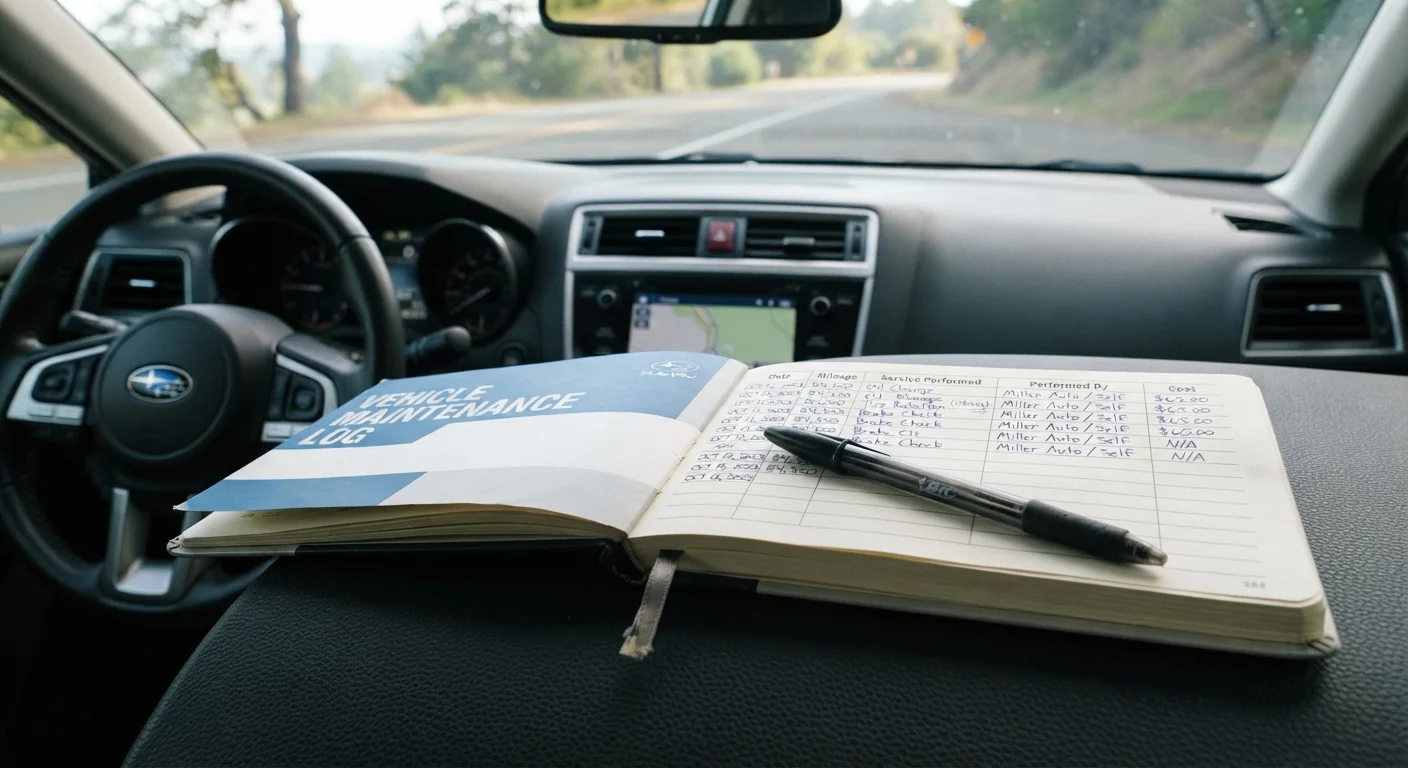
A vehicle maintenance log is a running record of every service, repair, inspection, and fluid change performed on your car - along with the date, odometer reading, and ideally the cost and parts involved. It can be a dedicated paper booklet kept in the glove box, a spreadsheet, or one of several apps built specifically for the purpose.
Most drivers don't keep one, and most don't realize what that omission costs them - in resale leverage, in warranty protection, and in the time a mechanic spends diagnosing a problem they could have spotted immediately with a service history in hand.
A log also complements tools like vehicle history reports, which capture some third-party data but often miss privately performed services and routine maintenance details that only an owner-kept log can provide.
Best Practices for Keeping an Effective Log
The difference between a useful maintenance log and a neglected one comes down to a handful of consistent habits. The practices below are straightforward to implement - the challenge is simply making them routine.
Record every service event, not just major repairs.
Small entries - a tire rotation, a cabin air filter swap, a brake fluid check - build a complete picture of how consistently a vehicle has been cared for. Gaps in a log often raise more suspicion at resale than the absence of one entirely.
Note the odometer reading alongside every service entry.
Mileage-based intervals are central to most maintenance schedules. Without odometer readings, there's no way to confirm whether services were performed on time or whether upcoming items are due.
Retain itemized receipts and attach them to your log.
A handwritten log entry is useful, but a receipt from the shop confirms what was actually done, which parts were used, and what the labor cost. This documentation is especially important if a repair ever needs to be revisited under warranty.
Log DIY maintenance with the same detail you'd expect from a shop.
Self-performed maintenance counts - but only if it's recorded. An undocumented oil change is indistinguishable from a skipped one, both to future buyers and to mechanics assessing a vehicle's history.
Store your log in a consistent, accessible location.
A maintenance record is only useful if you can produce it quickly - at a dealership, a repair shop, or during a private sale. Scattered receipts across a glove box don't function as a log.
Use your log proactively to anticipate upcoming services.
A log isn't just a historical record - it's a forward-looking tool. Reviewing past entries helps you spot patterns, avoid letting intervals lapse, and budget for upcoming services before they become urgent.
For tasks you handle yourself, understanding which maintenance is genuinely safe for DIY is a useful starting point before deciding what to log as self-performed versus what to leave to a qualified mechanic.
How a Log Protects You at Resale and with Warranties
Warranty Documentation Requirements
Most manufacturer and extended warranties don't require you to use a dealership for routine service - but they do generally require that service be performed at the recommended intervals. Keeping dated receipts and a service log is the most reliable way to demonstrate compliance if a warranty claim is ever disputed. Review your specific warranty terms for the exact documentation standards that apply to your vehicle.
When you sell a vehicle privately or trade it in, documented service history is one of the few concrete signals a buyer or appraiser can verify. Without it, they're estimating risk - and that uncertainty gets priced into their offer.
Up to $500+
Potential resale value impact of documented service history
Industry appraisers and used-car analysts consistently note that verifiable maintenance records can meaningfully increase a private sale or trade-in offer, though exact amounts vary by vehicle age, type, and market.
1 in 3
Used-car buyers who cite maintenance history as a top purchase factor
Consumer research from automotive market analysts indicates that a significant share of used-vehicle buyers rank service documentation among their primary evaluation criteria.
On the warranty side, manufacturers and extended warranty providers may require evidence that scheduled maintenance was completed at appropriate intervals before honoring a claim. A well-kept log, supported by receipts, is the most straightforward way to meet that standard.
Pair your log with a seasonal maintenance checklist to make sure the services you're logging are the right ones for each time of year - and that nothing falls through the cracks between entries.
Getting Started: Simple Steps to Take Today
“A car's maintenance history is one of the clearest signals of how it was treated. Buyers, mechanics, and warranty administrators all rely on it - and vehicles with documented records consistently attract more confidence than those without.”
— Cars & Auto Editorial Team, Automotive research and consumer guidance editors
Starting a maintenance log doesn't require purchasing anything special or reconstructing years of perfect records. Begin where you are, with what you have.
Once your log is in place, use it to stay ahead of commonly overlooked services. Transmission maintenance is one example of a service that drivers frequently defer - and a log makes it easy to see at a glance when it's actually due. It's also worth reviewing common maintenance myths so your log reflects accurate service intervals rather than outdated rules of thumb.
Digital Logs Offer Search and Backup Advantages
Apps designed for vehicle maintenance tracking let you search by service type, set interval reminders, and back up records automatically. If your physical log is lost or damaged, a cloud-synced digital record remains intact. Both formats are legitimate - consider keeping a digital backup even if you prefer paper as your primary log.