

Key Takeaways
Modern Tune-Up
A tune-up is a scheduled maintenance service designed to keep an engine running efficiently. On vehicles built in the last two decades, it typically involves replacing spark plugs, inspecting filters, and reviewing engine sensors - not the carburetor adjustments the term once implied. The specific tasks depend on your vehicle's make, model, and mileage.
Most modern engines use electronic fuel injection and engine control modules (ECMs) that self-adjust air-fuel ratios, eliminating the mechanical tuning steps that defined earlier tune-ups.
Why the Old Definition No Longer Applies
Decades ago, a tune-up meant physically adjusting a carburetor, setting ignition timing with a timing light, and replacing points and condenser inside the distributor - hands-on mechanical work that directly affected how an engine breathed and fired. That definition belongs to a different era of automotive engineering.
Modern vehicles - broadly speaking, anything with fuel injection and an electronic control module - don't have carburetors or mechanical distributors to adjust. The engine's computer continuously manages fuel delivery and ignition timing in real time. There is nothing to manually "tune" in the classic sense. Yet the word persists, now serving as shorthand for a cluster of interval-based maintenance tasks that keep the ignition and fuel systems in good working order.
Understanding this shift matters because it affects what you should expect from a service, what it should cost, and whether a shop's proposed work actually makes sense for your vehicle. For more on common maintenance misconceptions, see maintenance myths that cost drivers money.
What a Tune-Up Actually Covers Now
There is no single regulated checklist for a tune-up, which is part of why the term can feel vague. In practice, a thorough modern tune-up typically involves the following:
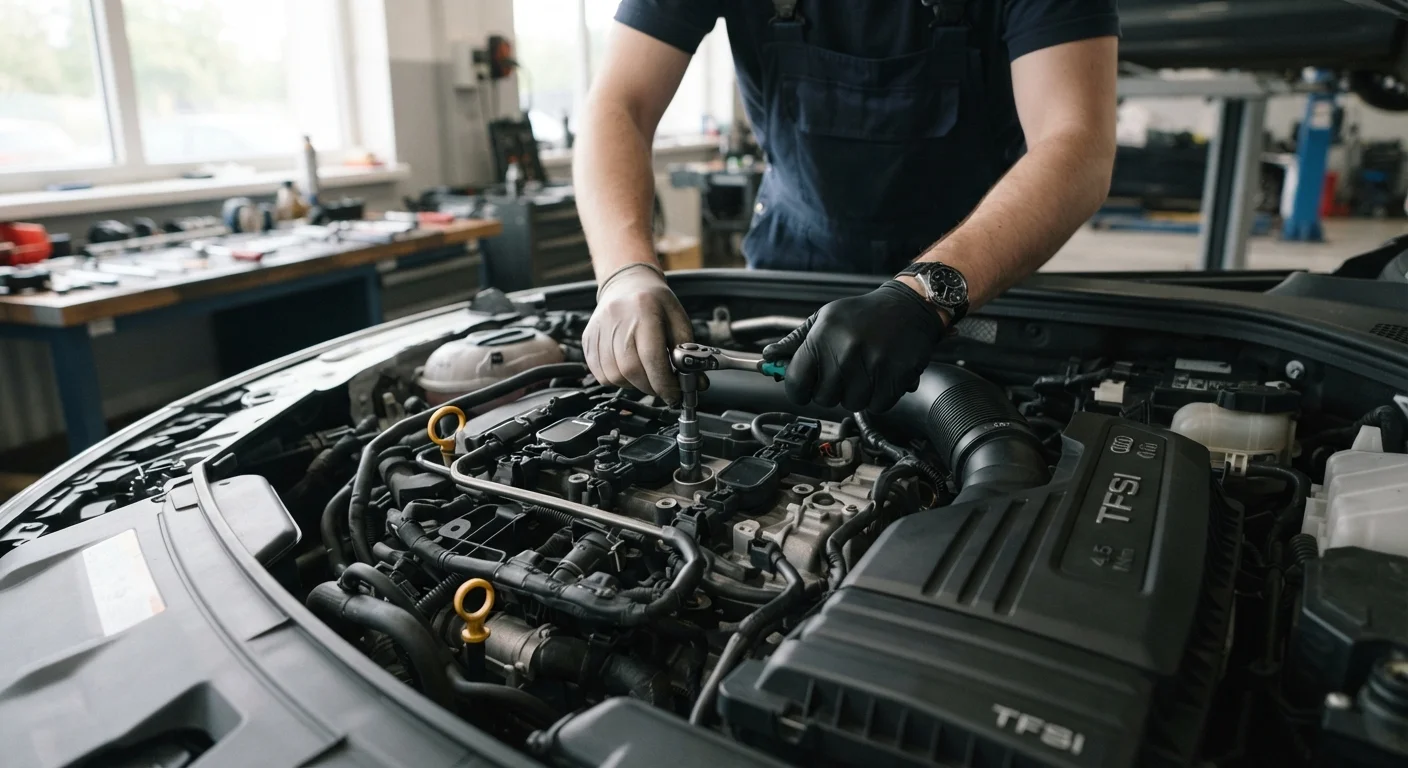
- Spark plug replacement: This is the core of any tune-up. Worn plugs cause misfires, reduced fuel efficiency, and rough idling. Conventional copper plugs may need replacement around 30,000 miles; iridium or platinum plugs common in newer vehicles are often rated for 60,000-100,000 miles.
- Air filter inspection and replacement: A clogged air filter restricts airflow to the engine, affecting combustion efficiency. Replacement intervals typically fall between 15,000 and 30,000 miles, though driving in dusty conditions shortens that window.
- Fuel filter service: On vehicles where the fuel filter is accessible (not all modern designs allow easy replacement), this may be included. It prevents debris from reaching fuel injectors.
- Throttle body inspection: Carbon buildup in the throttle body can cause rough idling or hesitation. Cleaning is straightforward but not always necessary.
- OBD-II diagnostic scan: A scan of the vehicle's onboard diagnostic system can reveal stored fault codes - including ones that haven't yet triggered the check engine light. This step is increasingly standard and valuable.
- Visual inspection of belts, hoses, and battery: Many shops include a general inspection of wear items as part of the service visit.
60,000-100,000 mi
Typical iridium spark plug service interval
Many vehicle manufacturers specify iridium or platinum spark plug replacement in this range, per owner's manual schedules.
15,000-30,000 mi
Common air filter replacement interval
Driving in dusty or high-pollution environments can shorten this interval significantly, per general industry maintenance guidance.
Because the scope varies by shop, always ask for an itemized list before approving work. Reading a mechanic's estimate carefully can help you identify what's genuinely due versus what's being upsold.
Using Your Owner's Manual as the Real Guide
The most reliable maintenance schedule for your specific vehicle is the one its manufacturer built and tested: the owner's manual. It lists service intervals by mileage and time for every major component, including spark plugs, filters, and fluids. Following it protects your warranty coverage and avoids paying for services ahead of schedule.
Check Your Manual Before Scheduling Service
Before agreeing to any tune-up package, look up your vehicle's actual maintenance schedule in the owner's manual or the manufacturer's online portal. Knowing what's genuinely due at your mileage helps you have a more informed conversation with any service advisor and avoid paying for work that isn't yet needed.
If your vehicle is showing symptoms - rough idling, reduced acceleration, poor fuel economy, or a check engine light - those are stronger signals than mileage alone. In those cases, a diagnostic visit is more informative than a standard tune-up package. See also how skipping basic maintenance compounds problems.
For drivers considering handling some of this themselves, it helps to know where the reasonable DIY boundaries sit. Some tasks are genuinely beginner-friendly; others warrant professional hands.