

Key Takeaways
Why Attic Insulation Fails Quietly
Attic insulation doesn't announce when it stops working. There's no warning light, no alert - just a slow creep in energy bills and rooms that never quite reach the right temperature. Most US homes built before the late 1990s were insulated to standards that are now considered insufficient, and even newer insulation degrades from moisture intrusion, pest activity, and simple settling over time.
The Department of Energy recommends R-values between R-30 and R-60 for most US attics depending on climate zone, with colder northern climates requiring the higher end of that range. If your home is more than 15-20 years old and the attic insulation has never been evaluated, there's a reasonable chance it's underperforming - regardless of how it looks from the hatch. Understanding the meaning of R-value and how it applies to your home is a useful starting point before you inspect or upgrade.
What to Look For During a Basic Attic Check
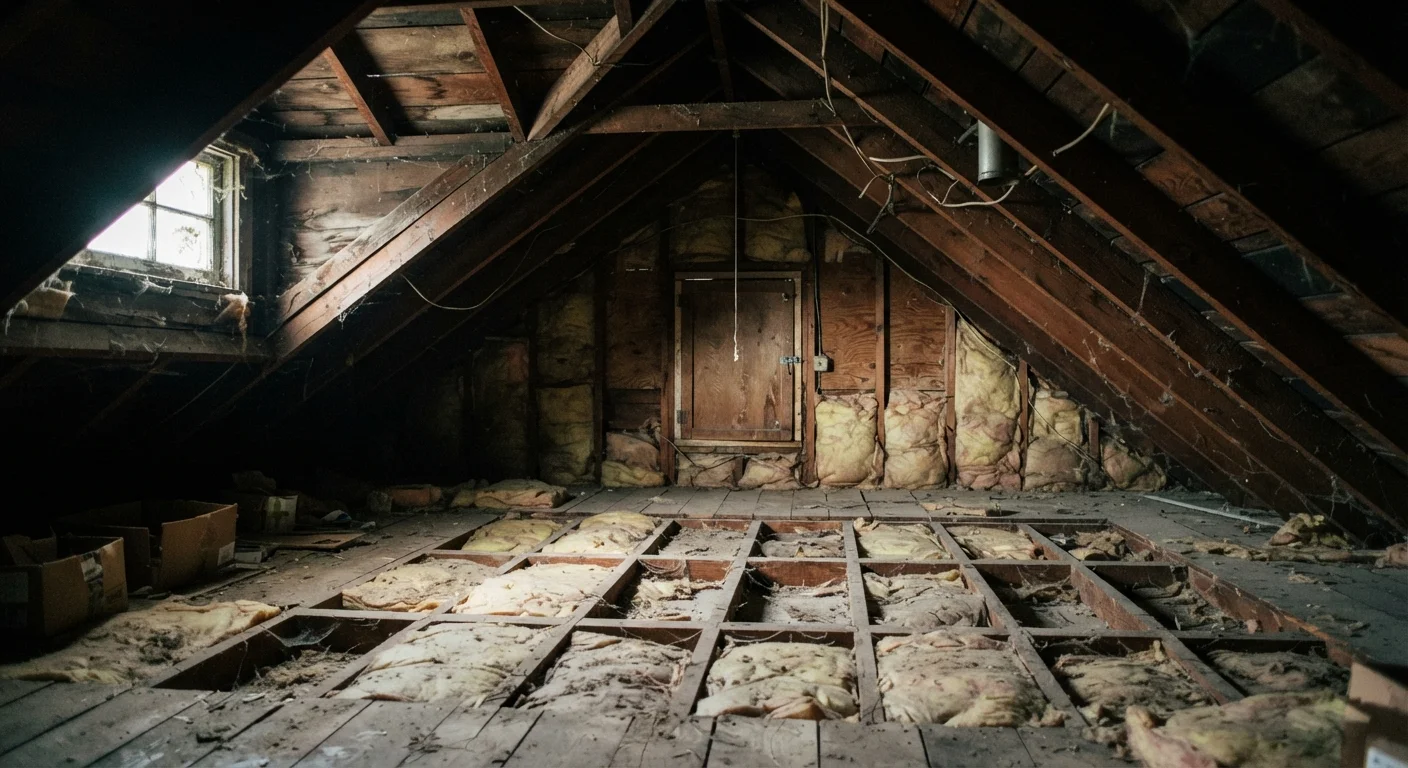
You don't need special equipment to spot obvious insulation problems. A flashlight and a tape measure are enough for a first look - though safety precautions matter. Step only on structural joists or a properly rated attic board, never on the insulation itself or drywall between joists.
Check the insulation depth first. Blown-in fiberglass or cellulose should reach at least 10-14 inches to approach R-38. If you can clearly see the tops of the joists, the insulation is almost certainly insufficient. Look for signs of compression - batts that have been flattened by storage boxes or foot traffic lose a significant portion of their R-value because their insulating ability depends on trapped air pockets. Moisture stains, dark discoloration, or a musty smell suggest water intrusion, which makes insulation far less effective and can indicate a separate ventilation or roofing problem that needs attention first.
Also note the attic hatch itself. Uninsulated or poorly weatherstripped hatches are among the most overlooked energy drains in a home - a finding covered in detail in our guide to lesser-known spots where homes lose energy.
Moisture Damage Requires More Than New Insulation
If you find wet, stained, or moldy insulation, do not simply add new material on top of it. Moisture compromises insulation permanently and often signals an unresolved roofing, ventilation, or condensation problem. Continuing without addressing the source can lead to structural damage and indoor air quality issues. A contractor or home inspector should assess the cause before any insulation work begins.
When to Call a Professional
A DIY visual inspection tells you a lot, but it won't catch everything. A certified energy auditor can perform a blower door test and thermal imaging scan that reveals air leaks invisible to the naked eye - around recessed light fixtures, plumbing stacks, electrical chases, and attic knee walls. These gaps often matter as much as total insulation depth, and adding more insulation on top of them without sealing first is a common and costly mistake.
If your HVAC system seems to run constantly despite reasonable thermostat settings, that's another flag worth investigating. Attic insulation failures and HVAC sizing problems often overlap in their symptoms. Our overview of HVAC replacement considerations explains how to think about those systems together. For most homeowners, a professional energy audit - often available at low or subsidized cost through utility companies - is the most efficient way to prioritize attic improvements before spending money on materials.
This article is for general informational purposes only. For work involving electrical components, structural elements, or attic access safety, consult a qualified contractor. Always verify local permit and code requirements before beginning any insulation project.