

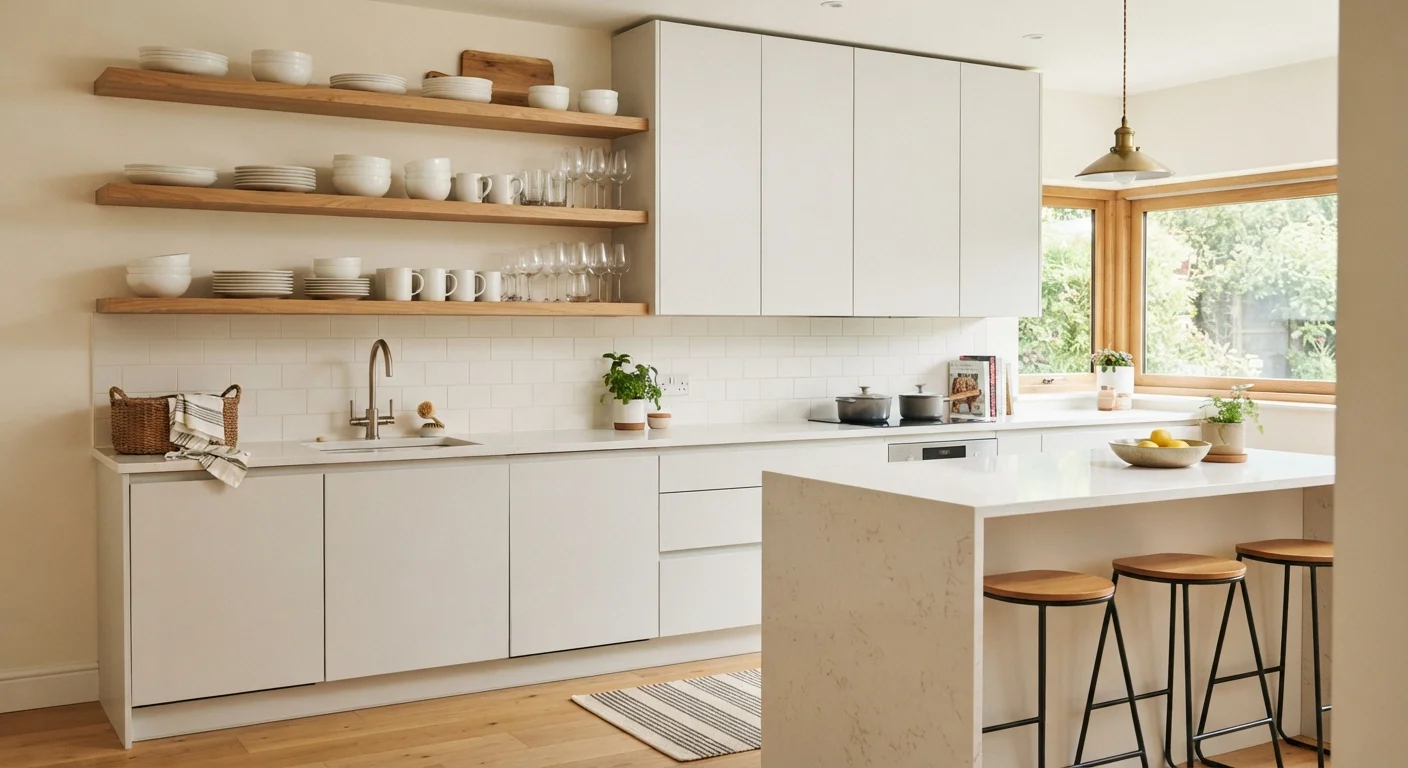
Key Takeaways
Makes kitchens feel more open and spacious
Removing upper cabinet doors eliminates visual bulk and allows sightlines to travel further, which is especially effective in smaller kitchens.
Everyday items are visible and easy to reach
No doors to open means faster access to commonly used dishes, glasses, and pantry staples during busy morning or dinner routines.
Can cost less during a renovation
Shelves typically require fewer materials and no door hardware compared to full upper cabinetry, which can reduce upfront remodeling costs.
Doubles as functional display space
Attractive dishware, plants, or cookbooks can be stored and shown simultaneously, adding character to a kitchen without separate decorating effort.
Grease and dust accumulate on exposed items
Cooking releases airborne particles that settle on open shelves quickly; dishes and glassware need washing before use even if they haven't been touched in days.
Disorder is always on display
Unlike closed cabinets, there's no hiding mismatched containers or cluttered stacks - open shelves demand consistent, visible organization at all times.
Requires more frequent cleaning
Shelf surfaces, brackets, and all stored items need regular wiping in active kitchens, adding meaningful maintenance time compared to closed storage.
Less forgiving for varied or mismatched storage
Practical but unattractive items - bulk packaging, plastic containers, random appliances - become eyesores on open shelves and may need to be stored elsewhere.
Our Verdict
Neither open shelving nor closed cabinets is universally superior - each serves different kitchens, habits, and households. Open shelving works well for those who cook regularly, keep a curated set of dishware, and maintain tidy surfaces. Closed cabinets are the more forgiving choice for busy families, heavy cooks, or anyone who prefers low-maintenance storage. For most real kitchens, a hybrid layout captures the visual benefits of open shelves without sacrificing the practicality of concealed storage.
Open shelving suits design-attentive households with minimal dishware and disciplined organization habits; closed cabinets suit busy families who prioritize convenience and easy cleanup.
Why This Decision Matters More Than It Looks
Kitchen storage decisions are among the most consequential in any home renovation. Unlike swapping out paint colors, changing from closed cabinets to open shelving - or the reverse - typically involves removing doors, refacing or replacing cabinet boxes, and possibly patching walls. As our guide on kitchen renovation decisions that are hard to reverse explains, cabinet configurations are costly to undo. That makes it worth slowing down before committing to either approach.
The debate is also more nuanced than aesthetics. In a real working kitchen - one used for daily cooking, school lunches, and messy weekends - the gap between what looks good in a design blog photo and what functions well at 7 a.m. is often significant.
The Case for Open Shelving
Open shelving has surged in popularity for good reasons. Removing upper cabinet doors immediately makes a kitchen feel larger and more airy - a meaningful benefit in compact kitchens where closed upper boxes can feel visually heavy. Shelves also put everyday items at a glance, so there's no hunting through stacked containers or double-checking what's behind a door.
Makes kitchens feel more open and spacious
Removing upper cabinet doors eliminates visual bulk and allows sightlines to travel further, which is especially effective in smaller kitchens.
Everyday items are visible and easy to reach
No doors to open means faster access to commonly used dishes, glasses, and pantry staples during busy morning or dinner routines.
Can cost less during a renovation
Shelves typically require fewer materials and no door hardware compared to full upper cabinetry, which can reduce upfront remodeling costs.
Doubles as functional display space
Attractive dishware, plants, or cookbooks can be stored and shown simultaneously, adding character to a kitchen without separate decorating effort.
From a cost standpoint, open shelving can be less expensive than full upper cabinetry during a remodel, since you're paying for fewer materials and no door hardware. And for households with attractive dishware - a curated collection of ceramics, wood cutting boards, or glass jars - open shelves function as both storage and display.
The Real-World Drawbacks of Open Shelving
The challenges become clear quickly in active kitchens. Cooking releases grease, steam, and airborne particles that settle on everything within reach - including exposed dishes and glassware. Open shelves require wiping down at least once a week in a regularly used kitchen, compared to occasional deep-cleaning for closed cabinets.
Grease and dust accumulate on exposed items
Cooking releases airborne particles that settle on open shelves quickly; dishes and glassware need washing before use even if they haven't been touched in days.
Disorder is always on display
Unlike closed cabinets, there's no hiding mismatched containers or cluttered stacks - open shelves demand consistent, visible organization at all times.
Requires more frequent cleaning
Shelf surfaces, brackets, and all stored items need regular wiping in active kitchens, adding meaningful maintenance time compared to closed storage.
Less forgiving for varied or mismatched storage
Practical but unattractive items - bulk packaging, plastic containers, random appliances - become eyesores on open shelves and may need to be stored elsewhere.
There's also the visibility factor: open shelves show every mismatched lid, random takeout bag, and disorganized stack. Maintaining a styled, Pinterest-ready shelf while also using your kitchen daily is genuinely difficult for most households. And unlike drawers - where even chaotic kitchen drawers can be closed and forgotten - open shelving puts disorder on permanent display.
Renter Considerations for Open Shelving
If you're renting, removing cabinet doors is typically not an option without landlord approval - and may require restoring them at move-out. Renters interested in open-shelf aesthetics often use freestanding shelving units instead, which require no permanent installation and can move with you. Always review your lease and get written permission before making any structural changes to cabinetry.
Where Closed Cabinets Still Win
Closed cabinetry remains the dominant choice in American kitchens for practical reasons. Doors conceal whatever is behind them - mismatched storage containers, bulk pantry goods, seldom-used appliances - without any organizational effort visible to guests. For households with children, frequent cooking, or limited time for upkeep, that concealment is genuinely valuable.
Cabinets also protect contents from dust, grease, and sunlight, which can fade dishware and degrade certain pantry items over time. In kitchens near cooking zones, this protection is meaningful. And because cabinet interiors are out of sight, you can use practical but unattractive storage solutions - zip-lock bags, mismatched containers, deep bins - without visual compromise.
~70%
US homeowners preferring upper cabinet storage
National Kitchen and Bath Association (NKBA) surveys consistently show the majority of US homeowners still choose closed upper cabinetry in kitchen remodels.
1-2x/week
Typical cleaning frequency for open kitchen shelves
In actively used kitchens, home organization experts generally recommend wiping down open shelves and exposed dishware at least once or twice per week to manage grease and dust.
The Hybrid Approach Most Designers Actually Recommend
In practice, most kitchen designers and experienced remodelers suggest a combination: closed lower cabinets (which endure the most wear, splatter, and heavy-item storage) paired with selective open shelving above, usually flanking a range hood or window. This layout lets you display a few attractive items while maintaining closed storage for the bulk of your kitchen goods.
The same logic that applies to vertical versus horizontal storage choices applies here - matching the storage format to what's actually being stored, rather than applying one system uniformly. A single open shelf for everyday glasses above the sink, combined with closed cabinets everywhere else, gives most households the aesthetic lift without the maintenance burden.
Before committing to either direction, inventory what you currently store in upper cabinets, assess your household's tidiness habits honestly, and consider whether your kitchen's cooking style will punish exposed shelves with grease. These practical variables matter more than design trends in determining what will work for you long-term.