

Key Takeaways
Option A
Vertical Storage
The space-multiplying approach for floor-constrained rooms.
Best for: Smaller rooms, narrow hallways, kitchens, and garages where floor space is premium but wall height is available.
Option B
Horizontal Storage
The accessible, grounded solution for flexible, low-profile organization.
Best for: Households with children, renters who can't wall-mount, and spaces where heavy or frequently accessed items need to stay at reach.
If you have a small kitchen or bathroom with limited floor space
Vertical Storage
Tall shelving and wall-mounted organizers reclaim unused wall height and keep counters clear without shrinking your usable floor area. See our small bathroom storage guide for layout-specific ideas.
If you're organizing a shared children's room
Horizontal Storage
Low, accessible bins and drawers let kids retrieve and put away items independently, reducing clutter and building habits. Overhead or high shelving creates safety risks for young children.
If you're setting up a garage or utility space
Vertical Storage
Wall panels, tall shelving units, and overhead racks make the most of garage wall and ceiling real estate, leaving the floor clear for vehicles and equipment.
If you rent and cannot drill into walls
Horizontal Storage
Freestanding dressers, under-bed containers, and stackable bins require no installation and won't affect your security deposit.
If you rotate seasonal items in and out regularly
Horizontal Storage
Flat, labeled bins stored under beds or on low shelves are easier to swap out than items stored high up. A methodical rotation system works best when items are at a reachable height.
What the Orientation of Storage Actually Changes
Storage direction isn't just an aesthetic choice - it determines how much you can store, how easily you can reach it, and how the room feels to move through. Vertical storage uses wall height to stack capacity upward, freeing floor space. Horizontal storage spreads items along a lower plane, prioritizing accessibility and stability over volume efficiency.
The distinction matters most in rooms where space is genuinely constrained. A bedroom with 9-foot ceilings has significant vertical potential that a standard 6-shelf unit only partially uses. A living room with a toddler in it has very different access requirements than a home office used only by adults.
Understanding these trade-offs is more useful than declaring one approach universally better - because neither is.
| Criterion | Vertical Storage | Horizontal Storage |
|---|---|---|
| Floor space used | Minimal - uses wall height | Moderate to high footprint |
| Accessibility | Varies - high items need a step stool | Consistently easy to reach |
| Child safety | Risk if tall units are unsecured | Generally safer, lower center of gravity |
| Installation requirements | Often requires stud anchoring | Typically freestanding, no drilling |
| Renter-friendly | Limited - wall mounting restricted | Yes - no permanent alterations needed |
| Storage capacity | High - scales with ceiling height | Moderate - limited by room footprint |
| Best room types | Kitchens, garages, bathrooms, closets | Kids' rooms, living rooms, bedrooms |
Room-by-Room: Where Each Approach Tends to Win
Kitchens and pantries: Vertical wins here for most households. Upper cabinet space and tall pantry shelving handle dry goods, small appliances, and cookware without crowding the counters or walkways. The trade-off is reachability - items stored above shoulder height require a step stool and shouldn't hold daily-use items. For those items, a horizontal drawer or low shelf at counter height works better.
Bedrooms and closets: Closets benefit from vertical organization - double-hanging rods, stackable shelf dividers, and over-door organizers multiply usable space significantly. Bedroom floors, however, often call for horizontal storage: low dressers, under-bed containers, and benches with internal storage keep items accessible without visual clutter. For ideas on organizing shared kids' rooms, low horizontal storage is almost always the more functional choice.
Garages: Vertical storage is the dominant strategy in most garages. Wall-mounted panels, tall shelving units, and ceiling-mounted racks clear the floor for vehicles and heavy equipment. Garage storage systems like shelving, wall panels, and overhead racks each suit different garage layouts - the key is anchoring vertical systems securely into studs or masonry.
Bathrooms: Tight bathrooms almost always benefit from vertical thinking. A narrow tower cabinet, over-toilet shelving, or recessed wall niches add capacity without eating into the floor plan. Our small bathroom storage guide covers layout-smart approaches in detail.
A Note on Wall Anchoring and Safety
Tall shelving units - whether freestanding or wall-mounted - should always be secured against tipping, especially in households with children. The US Consumer Product Safety Commission has long flagged furniture tip-overs as a preventable hazard. Anti-tip straps anchored into studs are widely available and straightforward to install; check the unit's weight rating and the manufacturer's anchoring instructions before loading shelves.
Structural Considerations Before You Go Vertical
Vertical storage sounds straightforward, but wall-mounted systems carry real installation requirements. Shelving loaded with books, pantry goods, or tools must anchor into wall studs - not just drywall. A standard stud is typically spaced 16 inches apart in US residential construction, but older homes may vary. A stud finder and appropriate anchors are minimum requirements; for heavier loads, consult installation guidance or a contractor.
Renters face a different constraint: most leases prohibit significant wall modifications. In those cases, freestanding vertical shelving units are a workable alternative - provided they're stable. Tall freestanding units should always be secured with anti-tip straps attached to a stud, particularly in households with children. This is a recognized safety requirement, not just a precaution.
For basement or below-grade spaces, both vertical and horizontal approaches should account for moisture before installing. Finishing a basement changes the storage calculus significantly - but even in an unfinished basement, moisture-resistant shelving material matters more than orientation.
Before committing to major wall-mounted systems, also check whether your walls are load-bearing. Understanding load-bearing vs. partition walls is essential if you're considering built-in vertical storage as part of a renovation.
Combining Both Approaches Effectively
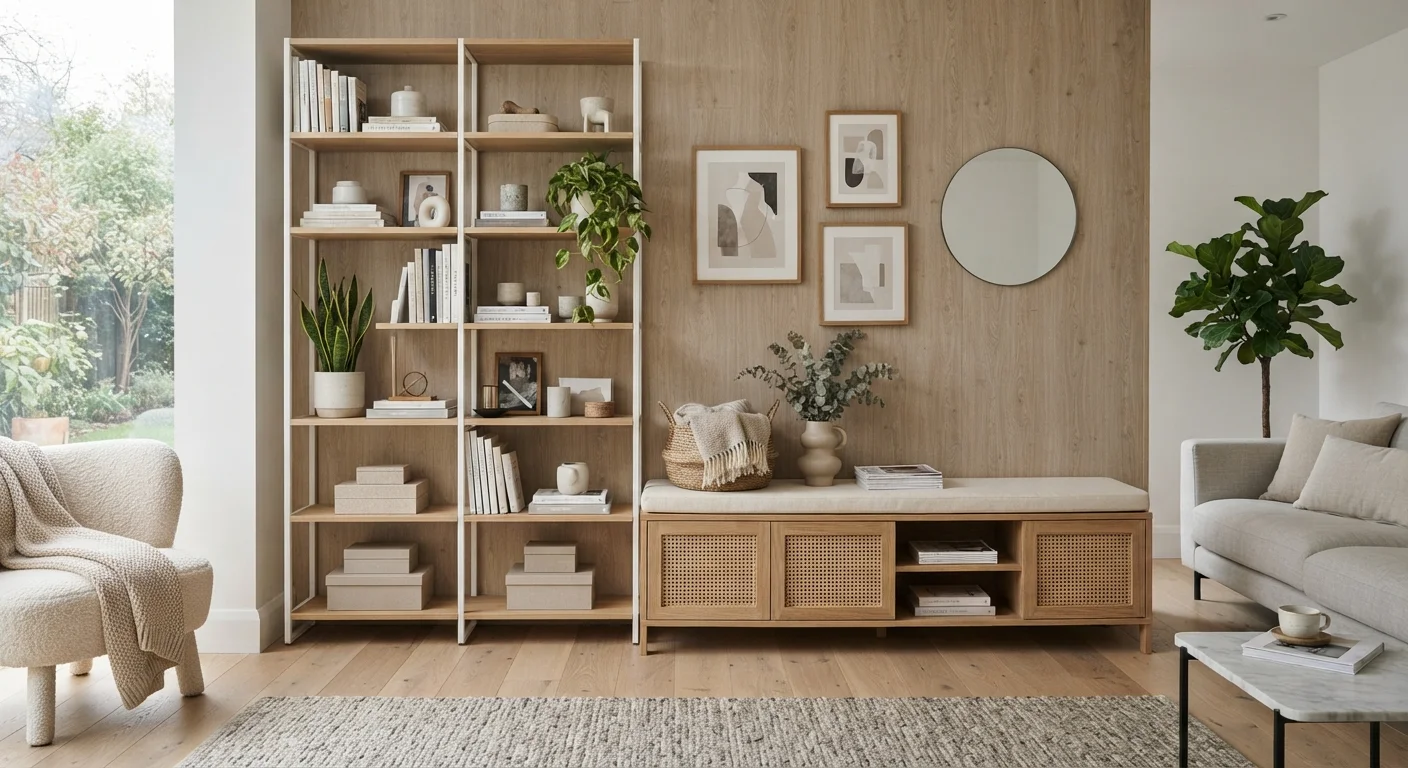
Most well-organized rooms use a mix of vertical and horizontal storage - the skill is in deciding which items belong at which height. A practical framework: store rarely used or seasonal items at the highest vertical positions, everyday items at mid-height (roughly between hip and shoulder), and heaviest or most frequently accessed items at the lowest horizontal level.
This tiered approach applies equally to a pantry, a garage wall, or a bedroom closet. It also aligns with how seasonal storage rotation works most efficiently - items you're not currently using go up high or into horizontal bins stored out of the way, while in-season items stay at accessible mid-range heights.
For kitchen decisions specifically, the choice between open shelving and closed cabinets intersects with vertical vs. horizontal thinking. Open shelving vs. closed cabinets involves its own set of practical trade-offs worth reviewing before committing to a kitchen layout.
The most functional storage systems aren't built around trends - they're built around who lives in the home, what they store, and how they move through the space daily.