

Key Takeaways
Negative Credit Item
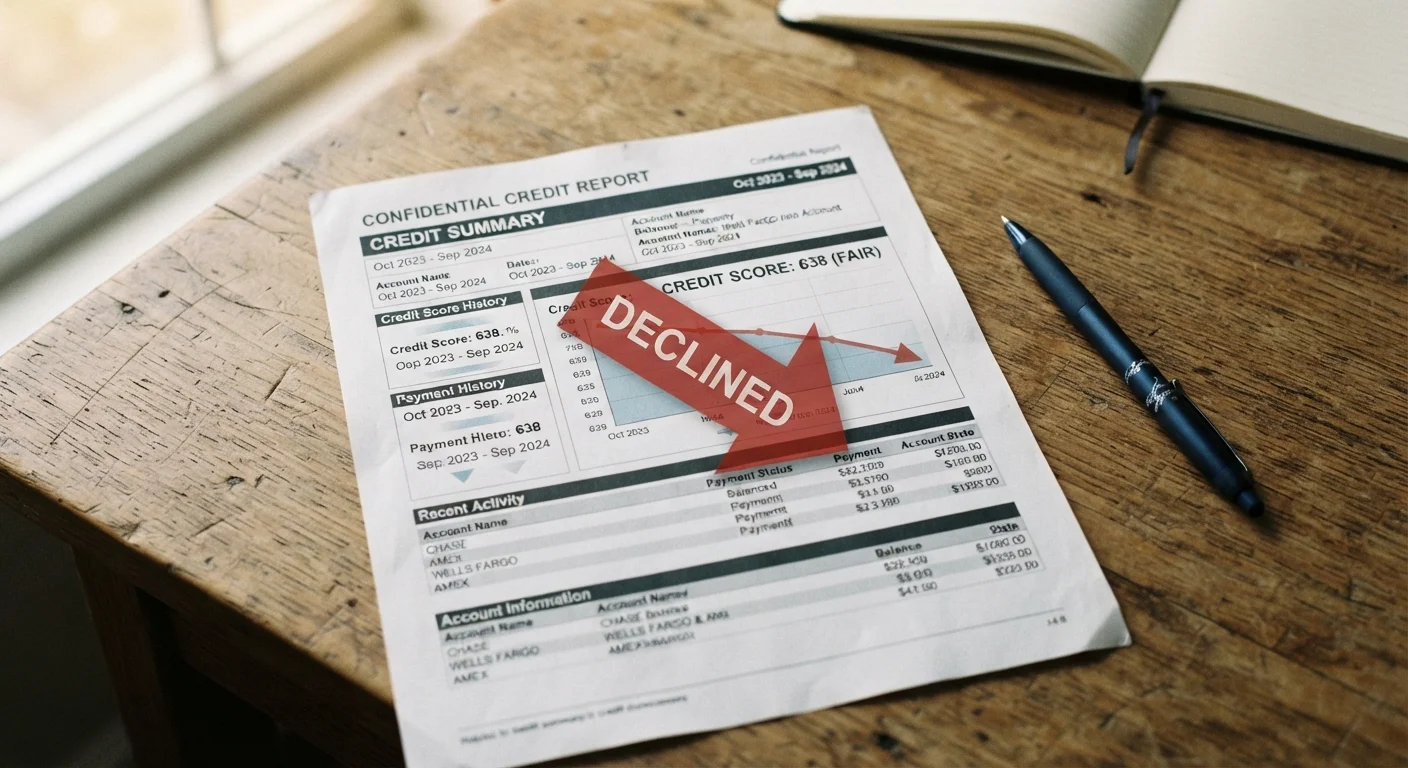
A negative item is any entry on your credit report that signals to lenders that you've had trouble repaying debt. Common examples include late payments, collections accounts, charge-offs, and bankruptcies. These entries lower your credit score and can remain on your report for several years under federal law.
Negative items are governed by the Fair Credit Reporting Act (FCRA), which sets maximum reporting periods - typically seven years for most derogatory marks and ten years for certain bankruptcies.
How a Negative Item Gets onto Your Report
Creditors report account activity to the major credit bureaus on a regular schedule, typically monthly. When a payment is missed or an account goes into a problem status, that information gets transmitted to Equifax, Experian, and TransUnion - and recorded in your credit file.
It's worth understanding that your credit report and your credit score are not the same thing. The report is the raw record; the score is a number calculated from that record. A negative item lands on the report first, then scoring models use it to calculate how much your score is affected.
Not every creditor reports to all three bureaus, which is why the same negative item may show up on one report but not another.
7 years
Standard reporting period for most negative items
Under the Fair Credit Reporting Act, most derogatory marks - including late payments, charge-offs, and collections - may not be reported beyond seven years from the date of first delinquency.
10 years
Reporting period for Chapter 7 bankruptcy
The FCRA allows Chapter 7 bankruptcy filings to remain on a credit report for up to ten years from the filing date, making it the longest-lasting standard negative entry.
35%
Weight of payment history in FICO scoring
According to FICO's published scoring framework, payment history is the largest single factor in a standard FICO score, which is why late payments and charge-offs have an outsized impact.
Late Payments: The Most Common Negative Item
A payment is typically reported as late once it reaches 30 days past due. Lenders generally report in increments: 30, 60, 90, and 120+ days late. Each escalating stage is its own entry and carries additional scoring weight.
Payment history is the single largest factor in standard credit scoring models - see how the five FICO score factors work for a full breakdown. A first-ever late payment on an otherwise clean profile tends to cause a more dramatic drop than a late payment added to a file that already has derogatory marks.
The late payment remains on your report for seven years from the original delinquency date. Its influence on your score generally diminishes over time, especially as you build a consistent record of on-time payments afterward.
Check All Three Reports Regularly
Because creditors aren't required to report to every bureau, a negative item might appear on one report but not the others. Reviewing your reports from Equifax, Experian, and TransUnion separately - which you can do at no cost through AnnualCreditReport.com - gives you the most complete picture. If you spot an inaccurate entry, the FCRA gives you the right to dispute it with the bureau that is reporting it.
Collections, Charge-Offs, and What They Mean
When a debt goes unpaid long enough, the original creditor may sell or transfer it to a collection agency, or internally write it off as a loss - called a charge-off. Both outcomes get recorded as separate negative entries on your credit report.
A charge-off doesn't mean the debt is forgiven. It means the original creditor has written the debt off their books as a business loss. You may still owe the balance, and a collector may pursue it. The charge-off itself is reported and stays on your file for seven years from the date of first delinquency - not from when it was charged off or sold.
Collections accounts follow the same seven-year timeline from original delinquency. Paying a collection may change the account status but typically doesn't remove the entry from your report early. Some collectors negotiate 'pay for delete' agreements, but this practice is not standardized and outcomes vary.
Bankruptcies: The Longest-Lasting Mark
Bankruptcy is the most significant negative event on a credit report in terms of both severity and duration. A Chapter 7 bankruptcy - where most unsecured debts are discharged - can stay on your report for up to ten years from the filing date. A Chapter 13 bankruptcy, which involves a repayment plan, typically stays for seven years.
Individual accounts included in the bankruptcy will also carry their own negative notations. However, similar to other derogatory marks, the practical impact on your score tends to decrease over time as new, positive credit activity accumulates.
Decisions about bankruptcy involve serious legal and financial trade-offs. Consulting a licensed attorney or qualified financial adviser is important before pursuing this path - this article provides general education only, not legal or financial advice.
How Impact Changes Over Time
Negative items don't hit your score with the same force throughout their entire reporting life. Scoring models generally assign more weight to recent activity than older events. A charge-off from six years ago matters less than one from six months ago, even if both are still on your report.
This is why consistent, responsible behavior after a negative event - making on-time payments, keeping balances manageable - gradually rebuilds your credit profile. The negative item is still there, but its proportional influence shrinks as your positive history grows.
For context on how different account types factor into recovery, understanding revolving vs. installment credit can help clarify which accounts contribute most to rebuilding your profile over time. Similarly, be aware of habits that quietly undermine a good credit score so you don't inadvertently create new derogatory marks while recovering from old ones.
This article is for general informational purposes only and does not constitute financial, legal, or credit advice. Individual credit outcomes vary. Consult a qualified financial professional for guidance specific to your situation.