

Why Spec Language Is Worth Decoding
Manufacturers invest considerable effort in writing product specifications - and not always to make things clearer. Terms like "up to," "nominal," and acronyms like IP or THD are technically accurate but practically opaque to most shoppers. The result is that two products with vastly different real-world performance can look identical on a spec sheet if you don't know what to look for.
This reference covers the most commonly misunderstood spec terms across product categories - electronics, textiles, appliances, and beyond. Use it alongside our guide to reading price tags like a researcher to build a more complete picture of what you're actually buying.
Electronics and Power Specs
Electronics spec sheets are dense with measurements that sound precise but require context to mean anything.
- Watt-hours (Wh): A measure of battery energy capacity. More watt-hours generally means longer runtime, but actual battery life also depends on device efficiency. "mAh" (milliamp-hours) is a related unit - useful for comparing similar devices at the same voltage, but misleading when voltages differ.
- "Up to" speeds or ranges: Maximum theoretical performance under ideal conditions. Wi-Fi routers, for example, advertise "up to" 3 Gbps speeds that few real-world setups approach. Treat these as ceilings, not expectations.
- THD + N: Total Harmonic Distortion plus Noise - a measure of audio signal purity. Lower percentages indicate cleaner audio reproduction. A figure below 0.1% is generally considered inaudible to most listeners.
- Nits: A unit of screen brightness. Higher nit counts improve visibility in bright environments. Displays rated above 1,000 nits are typically considered suitable for use in direct sunlight.
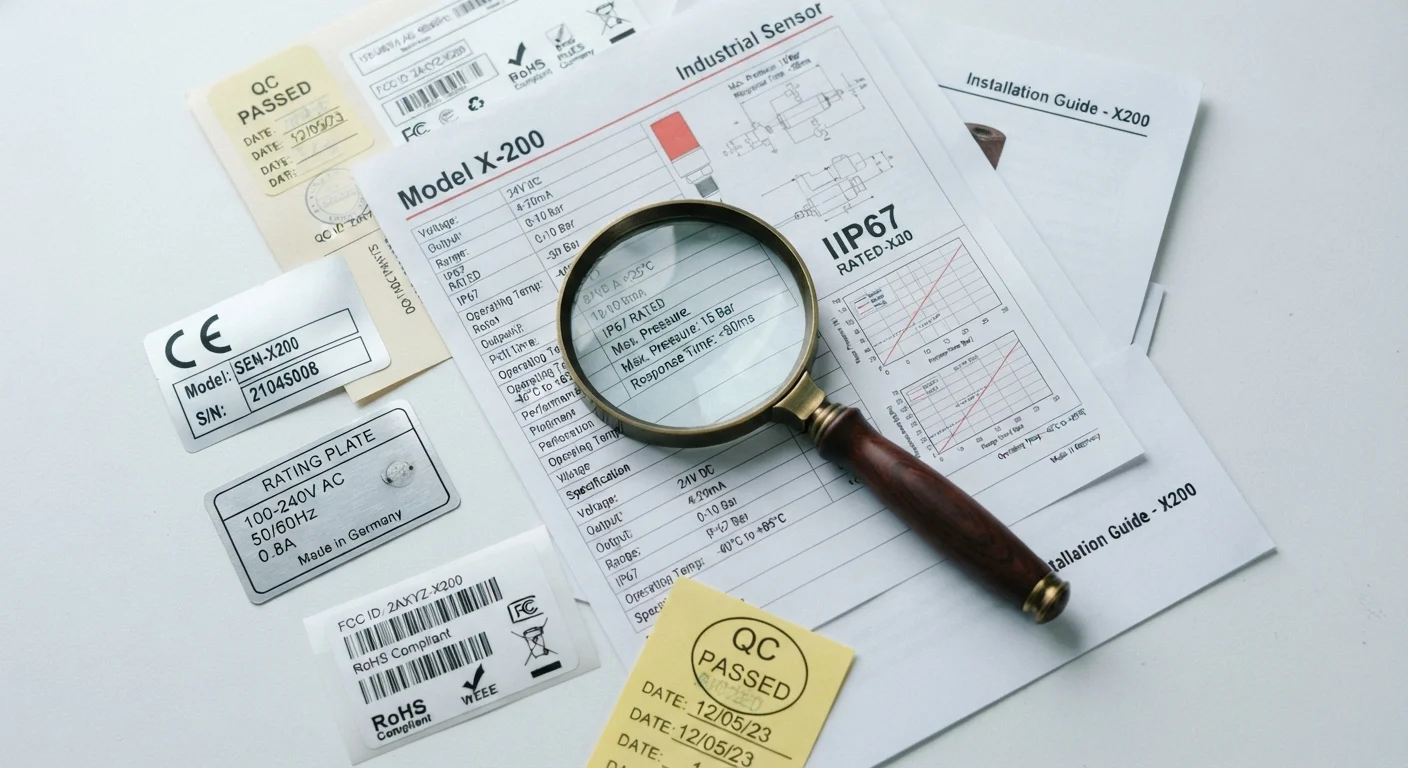
- IP Rating (e.g., IP67): The first digit (0-6) indicates dust resistance; the second (0-9) indicates water resistance. IP67 means fully dust-tight and submersible to 1 meter for up to 30 minutes. It does not mean waterproof under pressure or indefinitely.
Textiles, Appliances, and Everything Else
Non-electronics categories have their own equally opaque vocabularies.
- Thread count: The number of threads woven per square inch of fabric. It is widely misused as a quality proxy. Above roughly 400, thread count often reflects multi-ply threads counted individually - a marketing practice that inflates numbers without improving feel. Fiber type and weave quality matter more.
- Fill power (bedding): Measures the loft of down insulation - how many cubic inches one ounce of down occupies. Higher fill power (700-900+) means lighter weight for equivalent warmth, not simply "warmer."
- EER / SEER (appliances): Ratings for air conditioner efficiency. Higher numbers mean more cooling output per unit of electricity consumed. SEER applies to seasonal averages; EER reflects a single test condition.
- CFM (cubic feet per minute): Airflow volume, used for fans, range hoods, and HVAC. A higher CFM rating moves more air but should match the space it's intended for - oversized units in small spaces waste energy.
- Lumens vs. watts (lighting): Lumens measure actual light output; watts measure energy consumption. With LED lighting, wattage is a poor proxy for brightness. A 10-watt LED can produce the same lumens as a 60-watt incandescent bulb.
Decoding spec language is a skill that transfers across categories. The same critical reading that helps you evaluate an air conditioner's SEER rating applies when you're parsing a mechanic's estimate or reviewing a new car's window sticker.