

| Typical foreign transaction fee | 1%-3% per transaction (Standard range across major U.S. card issuers) |
| Typical bank international ATM flat fee | $3-$5 per withdrawal (Common range for U.S. bank accounts without travel benefits) |
| Dynamic currency conversion markup | 3%-7% above interbank rate (Estimated range; varies by operator and country) |
| Airport exchange margin (typical) | 5%-10% above mid-market rate (General industry estimate; varies by location) |
| Who discloses ATM operator surcharge | The ATM screen, before you confirm |
| Lower-cost alternative for DCC | Always choose local currency at payment |
The Fee Landscape at a Glance
When you spend or withdraw money outside the United States, several distinct charges can stack up quietly - often without a clear breakdown on your receipt. Knowing what each fee is called and who collects it puts you in a much stronger position before you leave home.
| Typical foreign transaction fee | 1%-3% per transaction (Standard range across major U.S. card issuers) |
| Typical bank international ATM flat fee | $3-$5 per withdrawal (Common range for U.S. bank accounts without travel benefits) |
| Dynamic currency conversion markup | 3%-7% above interbank rate (Estimated range; varies by operator and country) |
| Airport exchange margin (typical) | 5%-10% above mid-market rate (General industry estimate; varies by location) |
| Who discloses ATM operator surcharge | The ATM screen, before you confirm |
| Lower-cost alternative for DCC | Always choose local currency at payment |
For a broader foundation on the tools available to travelers, see Travel Money Explained: Currency, Cards, and Cash Abroad, which covers card types, cash strategy, and currency exchange basics in one place.
Foreign Transaction Fees
A foreign transaction fee is a surcharge your card issuer applies whenever a purchase is processed through a non-U.S. bank or in a foreign currency. It typically ranges from 1% to 3% of each transaction amount and appears as a line item on your monthly statement rather than at the point of sale.
Two parties often share this fee: your card's payment network (Visa, Mastercard, or American Express) and the bank that issued your card. The combined amount is what you see. Many cards marketed toward travelers waive this fee entirely - but the presence or absence of that waiver is stated in your cardholder agreement, not on the card itself. Check before you travel.
Note that a foreign transaction fee can apply even when you're physically in the U.S. if you purchase from a foreign-based merchant online. Conversely, some U.S.-based purchases processed abroad (e.g., on a cruise ship) may also trigger it.
Foreign Transaction Fee
A fee charged by your card issuer each time a transaction is processed through a non-U.S. bank or in a foreign currency. It typically ranges from 1% to 3% of the transaction amount.
Dynamic Currency Conversion (DCC)
A service that converts your purchase to U.S. dollars at the point of sale using the merchant's or ATM operator's exchange rate, which typically includes a significant markup above the interbank rate. Always choose to pay in local currency to avoid this.
Interbank Rate
The exchange rate at which banks trade currency with each other - often called the mid-market rate. Consumer rates at exchange booths, ATMs, and card networks are always less favorable than this rate.
ATM Operator Surcharge
A fee charged by the company that owns the ATM you're using, separate from any fees your home bank applies. This amount is disclosed on-screen before you confirm a withdrawal.
Currency Exchange Margin
The difference between the interbank rate and the rate a currency exchange vendor offers you. This margin is how vendors earn revenue and is rarely disclosed as a separate fee.
International Service Assessment
A percentage-based fee that some banks add to foreign ATM withdrawals or purchases, on top of any flat international ATM fee. It functions similarly to a foreign transaction fee.
ATM Charges: Multiple Layers
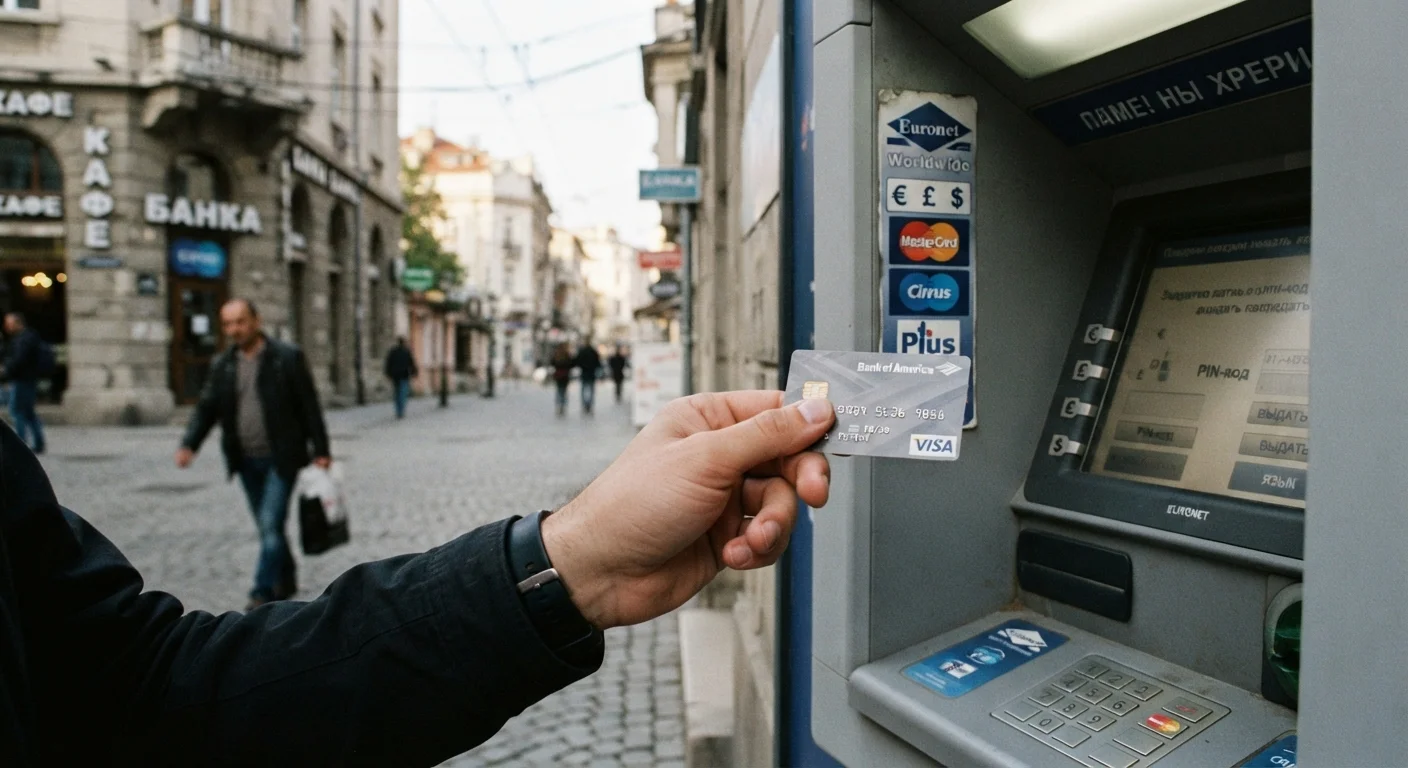
Withdrawing cash from a foreign ATM can involve up to three separate fees:
- Your bank's international ATM fee - a flat fee, often $3-$5 per withdrawal, charged by your home bank for using an out-of-network machine abroad.
- Your bank's international service assessment - a percentage fee (typically 1%-3%) applied on top of the withdrawal amount, similar in structure to a foreign transaction fee.
- The ATM operator's surcharge - a fee set by the bank or company that owns the ATM you're using. This is disclosed on-screen before you confirm the transaction and can vary widely by country and network.
The sum of these charges can easily reach 5%-8% of a single withdrawal. Withdrawing larger, less frequent amounts generally reduces the impact of flat fees, though this must be weighed against the risk of carrying significant cash.
For a side-by-side look at how different account types handle these fees, see Managing Travel Money: Bank Accounts, Cards, Cash, and Apps Compared.
Dynamic Currency Conversion: The Hidden Markup
Dynamic currency conversion (DCC) is an optional service offered at many foreign ATMs and point-of-sale terminals. When you're shown your total in U.S. dollars rather than local currency, DCC is almost certainly in play. The merchant or ATM operator - not your bank - sets the exchange rate, and it typically includes a markup of 3%-7% above the interbank rate.
Choosing to pay in the local currency instead always lets your card's network apply its own rate, which is generally more competitive. The screen wording is sometimes misleading - phrases like "pay in your home currency for certainty" frame DCC as a benefit when it is almost always the more expensive option.
How to Decline DCC at a Terminal
When an ATM or card reader displays your total in U.S. dollars and asks whether you want to proceed, look for an option to pay in the local currency instead - it may be labeled "other amount," "local currency," or "decline conversion." Always select the local currency option. If the terminal does not offer a choice, complete the transaction and review the charge; some card issuers allow DCC disputes. When in doubt, ask the merchant to rerun the transaction in local currency before you leave.
Understanding how underlying rates are set helps put DCC markups in context. See How Exchange Rates Actually Work - and Why They Keep Changing for a plain-language breakdown of interbank rates versus consumer rates.
Currency Exchange Margins
Whenever you exchange physical currency - at a bank, currency exchange kiosk, or airport booth - the vendor earns a margin by quoting you a rate worse than the interbank (mid-market) rate. This margin is the vendor's compensation and is almost never labeled as a fee. A rate board showing no commission can still carry a 5%-10% margin built directly into the quoted rate.
Airport exchange booths tend to carry the widest margins due to lower competition and captive foot traffic. Airport Currency Exchanges: What the Rate Boards Don't Tell You explains how this pricing works in more detail.
Some common beliefs about where to get the best rates don't hold up under scrutiny. Travel Money Myths That Cost Travelers Real Money examines those assumptions against the evidence.
For practical strategies to reduce the combined impact of all these charges, see Spending Money Overseas: Approaches That Minimize Fees and Confusion.
This article is for general informational purposes only and does not constitute financial or legal advice. Fee structures vary by card issuer, bank, and country. Always verify current terms with your financial institution before traveling.